




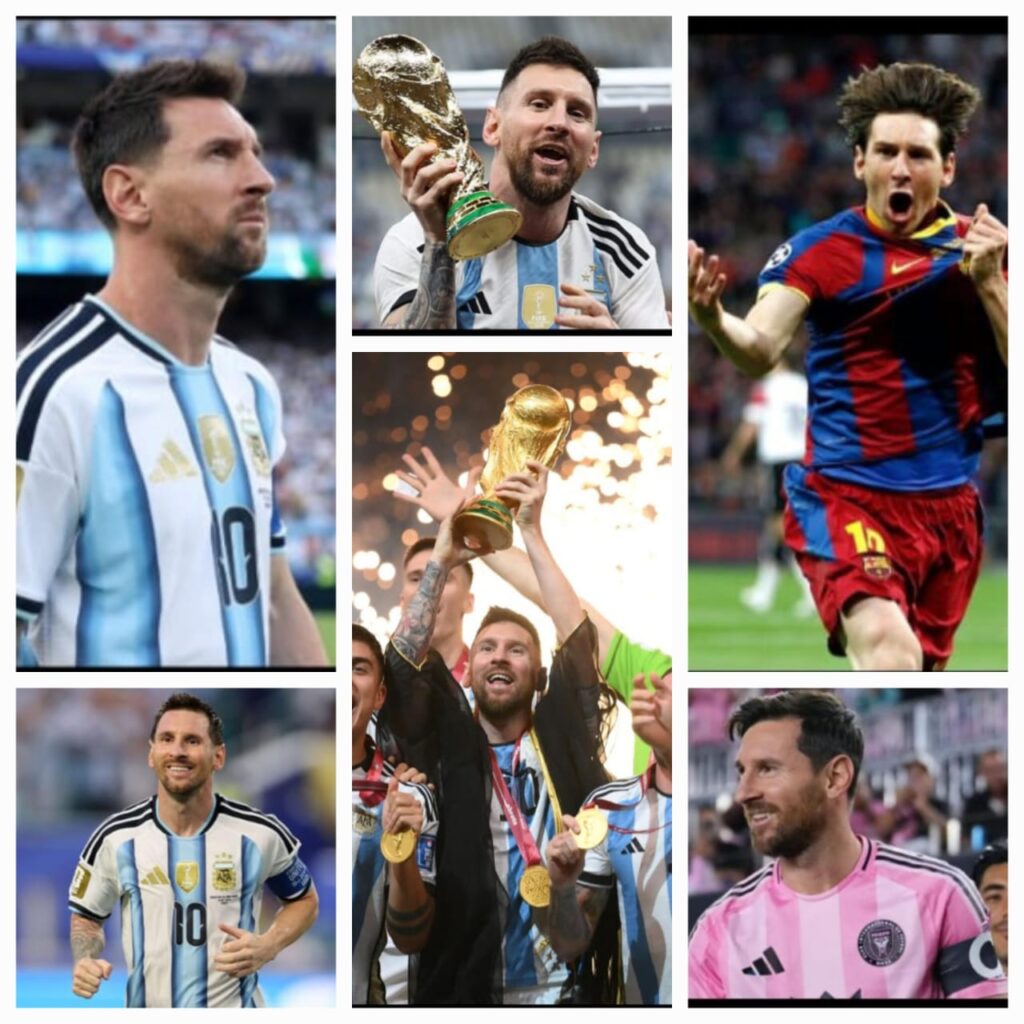
After 21 years, six World Cups, 207 appearances, 125 goals and a World Cup triumph, Argentina’s legendary No. 10 closes his international chapter.
By Suleiman Aremu | Solaremnews | Tuesday 1 September, 2026
There are footballers who win trophies, footballers who break records and footballers whose brilliance defines an entire generation. Then there is Lionel Andrés Messi, a footballer whose extraordinary journey has made it almost impossible to discuss the modern history of the game without mentioning his name.
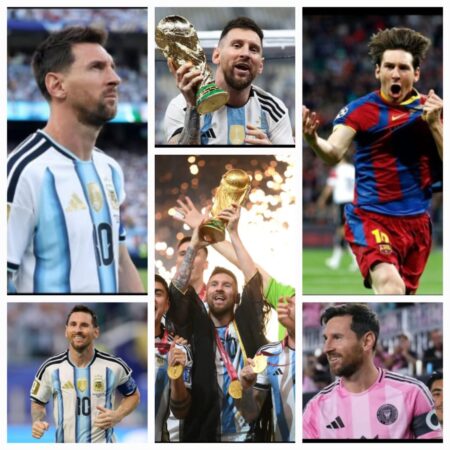
At 39, after 21 years of representing Argentina, six FIFA World Cup appearances, 207 international caps and 125 goals, Messi has finally closed the international chapter of a career that began with promise, passed through years of disappointment and criticism, and ultimately ended in redemption, glory and football immortality. His decision to retire from international football was announced on August 31, 2026, following Argentina’s 1–0 extra-time defeat to Spain in the 2026 World Cup final.
But this is not the retirement of Lionel Messi the footballer. It is the end of Messi’s journey with the Argentina national team. He remains a professional player with Inter Miami, where he is under contract through 2028.
And perhaps that distinction is important because Messi’s story is not merely about the ending of a career. It is about the transformation of a small boy from Rosario into one of the greatest athletes the world has ever seen.
From Rosario, a little boy with a big dream
Lionel Andrés Messi was born on June 24, 1987, in Rosario, Santa Fe, Argentina.
Football entered his life at an early age. As a boy, he played for Newell’s Old Boys and quickly demonstrated an extraordinary natural ability with the ball.
Yet his childhood was not without challenges. Messi was diagnosed with a growth hormone deficiency and required treatment that was financially demanding for his family.
At just 13, he left Argentina for Spain after Barcelona offered him the opportunity to join its famed La Masia youth academy and assist with his development.
That move changed everything.
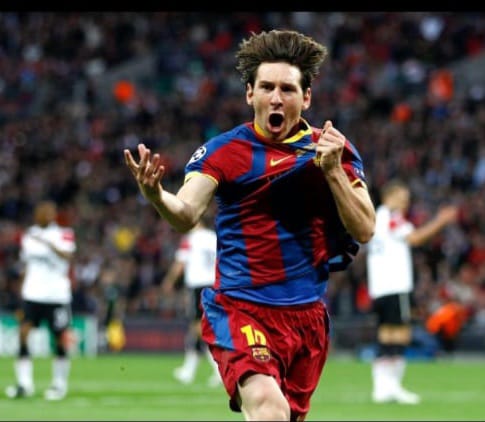
The small boy who had left Rosario would eventually become the most decorated player in Barcelona’s history and, arguably, the most influential footballer of his generation.
The birth of a Barcelona legend
Messi progressed through Barcelona’s youth system before making his official first-team debut as a 17-year-old in October 2004.
It was only an eight-minute appearance, but it was the beginning of a remarkable era.
He would go on to spend 17 seasons with Barcelona, making 778 official appearances and scoring 672 goals. He remains the club’s record goalscorer, appearance-maker, assist provider and trophy winner.
With Barcelona, Messi won an extraordinary collection of honours:
- 10 La Liga titles
- 7 Copa del Rey titles
- 8 Spanish Super Cups
- 4 UEFA Champions League titles
- 3 UEFA Super Cups
- 3 FIFA Club World Cups
That gave him 35 trophies with Barcelona alone.
His Champions League triumphs came in 2006, 2009, 2011 and 2015. UEFA notes, however, that while Messi was part of Barcelona’s 2006 Champions League-winning campaign, he did not play in the final. His three Champions League final victories came in 2009, 2011 and 2015.
Barcelona was not simply a club where Messi played football. It was where the world watched an extraordinary talent develop into a phenomenon.
The records kept falling
Messi’s genius was not limited to trophies.
He rewrote record books across Spain and Europe.
He remains La Liga’s all-time leading goalscorer with 474 goals, holds the record for most goals in a single La Liga season with 50 in 2011/12, has won the Pichichi award for the league’s top scorer eight times and holds the record for most La Liga hat-tricks with 36.
In 2012 came perhaps one of the most astonishing statistical achievements in football history.
Messi scored 91 goals in the calendar year, combining his goals for Barcelona and Argentina. His club total alone was 79.
That year seemed to capture the Messi phenomenon: there appeared to be no limit to what he could accomplish.
Eight Ballon d’Or awards
Individual recognition followed the trophies.
Messi has won the prestigious Ballon d’Or eight times, more than any other footballer.
His victories came in:
2009, 2010, 2011, 2012, 2015, 2019, 2021 and 2023.
He has also won the European Golden Shoe six times, another record.
For years, the debate over who was football’s greatest player revolved largely around Messi and Cristiano Ronaldo. Their rivalry pushed both men to extraordinary levels and dominated world football for more than a decade.
But regardless of where one stands in that debate, Messi’s statistical record and collection of honours have placed him firmly among football’s immortals.
The painful Argentina years
Yet there was one criticism that followed Messi for much of his career.
For all his success with Barcelona, he had not won a major senior international trophy with Argentina.
The pressure was enormous.
Argentina reached the 2014 World Cup final in Brazil, but Germany defeated them 1–0 after extra time.
Then came back-to-back Copa América disappointments.
Argentina lost the 2015 Copa América final to Chile on penalties. A year later, at the Copa América Centenario, Argentina again lost to Chile on penalties.
The criticism became intense.
Some questioned Messi’s commitment to Argentina. Others compared him constantly with Diego Maradona. For a player who had won almost everything possible at club level, his inability to lift a major senior trophy with his country was used by critics to diminish his legacy.
After the 2016 Copa América final, Messi briefly announced his retirement from international football.
But the story was not finished.
He returned.
And that decision changed the history of Argentine football.
The redemption begins
In 2021, Messi finally lifted a major senior international trophy with Argentina.
At the Maracanã in Brazil, Argentina defeated Brazil 1–0 in the Copa América final, with Ángel Di María scoring the decisive goal.
For Messi, the significance went far beyond the trophy.
The man who had endured years of criticism had finally delivered a major title for his country.
The weight on his shoulders began to disappear.
A year later came another trophy.
In 2022, Argentina defeated Italy 3–0 at Wembley to win the Finalissima, the meeting between the champions of South America and Europe.
But the greatest chapter was still ahead.
Qatar 2022: the dream becomes reality
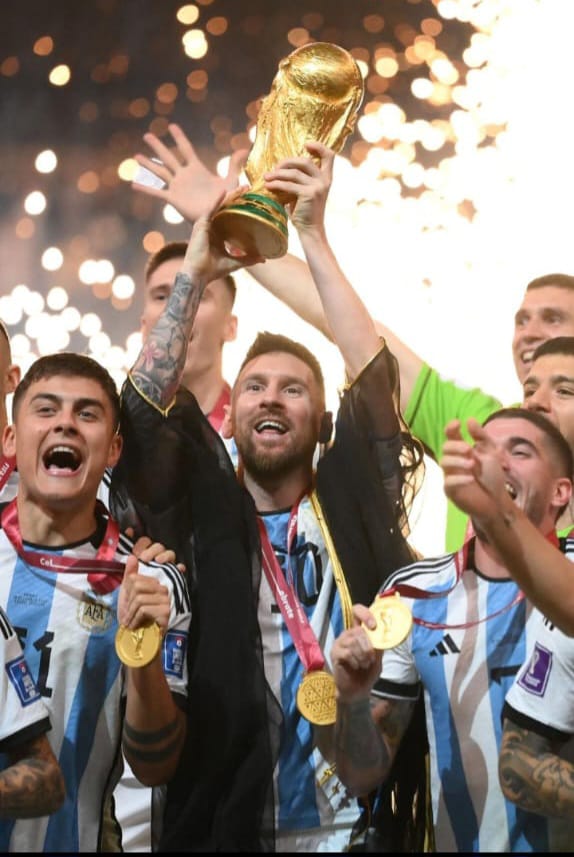
The 2022 FIFA World Cup in Qatar became the tournament that transformed Messi’s legacy from extraordinary to almost untouchable.
Argentina lost its opening match to Saudi Arabia, creating immediate doubts.
But Messi and his teammates responded.
Argentina progressed through the tournament and eventually reached the final against France.
What followed was one of the greatest World Cup finals ever played.
Messi scored twice. He also converted Argentina’s penalty in the shootout.
The match ended 3–3 after extra time before Argentina won 4–2 on penalties.
Messi was finally a World Cup champion.
The trophy that had eluded him throughout his career was finally in his hands.
He was also awarded the World Cup Golden Ball as the tournament’s best player.
It was the perfect answer to those who had spent years questioning whether Messi could produce the same magic for Argentina that he had produced for Barcelona.
He had done it.
And he had done it on football’s biggest stage.
Copa América glory again
Messi and Argentina did not stop in Qatar.
In 2024, Argentina won the Copa América again, defeating Colombia in the final.
It gave Messi his second Copa América title, following the triumph of 2021.
His international trophy cabinet now included:
- 2021 Copa América
- 2022 Finalissima
- 2022 FIFA World Cup
- 2024 Copa América
- 2008 Olympic gold medal
- 2005 FIFA Under-20 World Cup
The international trophy that had once seemed impossible for Messi to win had become one of the strongest parts of his legacy.
Six World Cups: another record
The 2026 FIFA World Cup became Messi’s sixth appearance at football’s biggest tournament.
He had previously played at:
2006, 2010, 2014, 2018 and 2022.
By appearing in 2026, he became the first male footballer to play at six World Cups. FIFA records that he finished with 34 World Cup appearances and 21 goals.
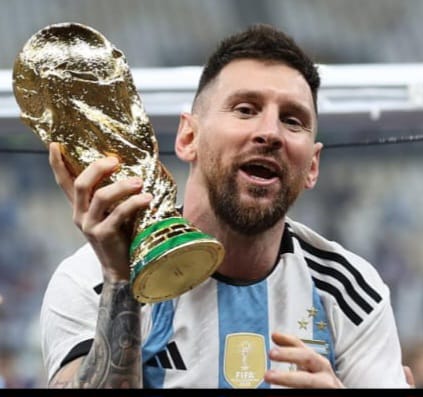
His six World Cups also produced a remarkable collection of records.
Messi became:
- The player with the most World Cup appearances, 34
- The first player to score at five different World Cups
- The first player to appear at six World Cups
- Argentina’s leading World Cup goalscorer with 21 goals
- The player with the most World Cup victories
- The only player to score in the group stage, round of 32, round of 16, quarter-final, semi-final and final
- A two-time World Cup Golden Ball winner, having won the award in 2014 and 2022
UEFA’s latest record compilation confirms his 34 World Cup appearances, two Golden Balls and his unique scoring record across every knockout stage.
In 2026, Messi added another extraordinary record: at 39 years and 25 days, he became the second-oldest player ever to appear in a World Cup final and the oldest outfield player to feature in the match.
The 2026 World Cup: one final chapter
There was something almost poetic about Messi returning to the World Cup at 39.
Argentina, the defending champions, reached the final once again.
Their opponent was Spain.
This time, however, there would be no second World Cup triumph.
Spain defeated Argentina 1–0 after extra time, leaving Messi and his teammates runners-up.
It was a painful ending, but it could not erase what Messi had already achieved.
He had reached three World Cup finals — in 2014, 2022 and 2026 — and won one.
He had played at six tournaments.
He had become Argentina’s most capped player and greatest goalscorer.
And he had finally given his country the World Cup it had waited 36 years to win.
207 appearances, 125 goals
When Messi announced his international retirement on August 31, 2026, he left Argentina duty as the country’s record appearance-maker and record goalscorer.
His final figures were:
207 appearances
125 goals
He made his Argentina senior debut in 2005 and represented the national team for more than two decades.
Those numbers tell only part of the story.
Behind the 207 appearances were years of travelling, injuries, pressure, criticism, victories, defeats and expectations.
Behind the 125 goals were moments that millions of Argentines will remember for the rest of their lives.
From Barcelona to Paris
After 17 extraordinary seasons at Barcelona, Messi’s relationship with the club came to an unexpected end in 2021.
He moved to Paris Saint-Germain, where he spent two seasons.
At PSG, he won:
- 2 Ligue 1 titles
- 1 Trophée des Champions
Although his Paris adventure never reached the heights of his Barcelona years, it added more silverware to a career that was already overflowing with success.
Then came another unexpected chapter.
Messi takes his magic to Miami
In 2023, Messi moved to the United States to join Inter Miami.
Some expected the move to represent the twilight of his career.
Instead, Messi continued making history.
He immediately helped Inter Miami win the 2023 Leagues Cup, giving the club its first major trophy.
The move also transformed the profile of football in the United States.
Messi’s arrival brought global attention to Major League Soccer and made Inter Miami one of the most watched clubs in the world.
He later helped Miami win the 2024 MLS Supporters’ Shield and the 2025 Eastern Conference title, before leading the club to its first MLS Cup in 2025.
He was named MLS Cup Most Valuable Player.
In 2025, he also won the MLS Golden Boot with 29 goals and was named MLS Most Valuable Player.
He became the first player in MLS history to win the MVP award in consecutive seasons.
The 900-goal milestone
Even at an age when most footballers have long retired, Messi continued breaking records.
On March 18, 2026, he scored the 900th senior goal of his career, becoming only the second player to reach that extraordinary milestone.
And there was no indication that he was finished.
On August 29, 2026, just days before announcing his international retirement, Messi scored four goals and provided an assist in Inter Miami’s 7–1 victory over Montréal.
That performance was a powerful reminder that although Messi had said goodbye to Argentina, the footballer himself had not yet said goodbye to the game.
The numbers that define a genius
Messi’s career statistics are almost difficult to comprehend.
With Barcelona:
778 appearances
672 goals
35 trophies
With Argentina:
207 appearances
125 goals
1 World Cup
2 Copa América titles
1 Finalissima
1 Olympic gold medal
1 FIFA Under-20 World Cup
At the World Cup:
6 tournaments
34 appearances
21 goals
1 title
2 Golden Balls
And individually:
8 Ballon d’Or awards
6 European Golden Shoes
8 Pichichi awards
900+ senior career goals
Barcelona records Messi as its all-time leader in appearances, goals, assists and trophies, while UEFA lists his eight Ballon d’Or awards, six European Golden Shoes, 474 La Liga goals and 50-goal La Liga season as among his major records.
More than trophies
Perhaps the greatest thing about Messi’s story is that it cannot be reduced to a list of trophies.
It is a story about persistence.
A little boy from Rosario was told he needed medical treatment to address a growth problem.
At 13, he left his homeland and moved to a foreign country.
He entered Barcelona’s academy and had to prove himself.
He became a star.
He became a superstar.
He became Barcelona’s greatest player.
He became one of the most recognisable sportsmen on earth.
But Argentina remained unfinished business.
He lost a World Cup final.
He lost two Copa América finals.
He briefly retired from international football.
He returned.
He won the Copa América.
He won the Finalissima.
He won the World Cup.
He won another Copa América.
He returned for a sixth World Cup at the age of 39.
He reached another final.
And then, finally, he said goodbye.
Football immortality
There is always an argument about who is the greatest footballer of all time.
Pelé.
Diego Maradona.
Johan Cruyff.
Cristiano Ronaldo.
Lionel Messi.
Such debates will continue long after all of them have left the pitch.
But Messi’s case is strengthened by the extraordinary completeness of his career.
He has won league titles, domestic cups, Champions League trophies, international championships, a World Cup, Olympic gold, individual awards and almost every major honour available to a footballer.
He has scored goals in almost every possible way.
He has created goals.
He has dribbled past defenders who seemed unable to touch him.
He has produced free kicks, assists, hat-tricks, solo goals and moments of genius that have been replayed millions of times.
He has carried the expectations of Barcelona and Argentina.
And, ultimately, he delivered.
Barcelona officially describes him as the club’s record holder for appearances, goals, assists and trophies, while also recognising his 35 trophies with the club.
The boy from Rosario never stopped dreaming
Perhaps that is why Messi’s retirement from Argentina feels different.
It is not simply another footballer walking away from international duty.
It feels like the closing of a chapter in football history.
The boy from Rosario who once left Argentina at 13 became the man who returned home as a World Cup champion.
The player who was once accused of failing Argentina became the country’s record goalscorer and appearance-maker.
The footballer who was repeatedly compared with Maradona created a legacy that belongs entirely to himself.
The eight-time Ballon d’Or winner has nothing left to prove.
His international journey ends with 207 appearances, 125 goals, two Copa América titles, a Finalissima, a World Cup, an Olympic gold medal and a World Cup Golden Ball.
More importantly, it ends with the respect and affection of a nation that once questioned him but ultimately watched him deliver its greatest footballing dream.
Messi himself acknowledged the pain of the decision while saying he had always given everything for Argentina and that the time had come to make room for a new generation.
And so, Lionel Messi walks away from the Argentina shirt.
Not as a player who failed.
Not as a player who left with regrets.
But as a champion.
As a record-breaker.
As an eight-time Ballon d’Or winner.
As a World Cup winner.
As Argentina’s greatest-ever goalscorer.
As one of the most decorated footballers in history.
And, above all, as the little boy from Rosario who grew into a giant of world football.
**The era may be ending.
But the legend of Lionel Messi will not.**
Football immortality has already claimed him.
Suleiman Aremu, Publisher of Solaremnews, writes from Ilorin.


Other Articles

Customs, ACSPN Deepen Partnership On Media, Digital Communication




No Comment! Be the first one.