




Toor! 🤔🤔🤔 Who will help us beg our State Governors to allow Local Government Councils to function as the third tier of government they are constitutionally meant to be?
Solaremnews | Monday 24 August 2026
The latest Federation Account Allocation Committee (FAAC) figures should make every Nigerian sit up and ask serious questions. The Federal Government, 36 states and 774 Local Government Councils shared a record ₦3.007 trillion from the Federation Account for July 2026, making it the highest monthly FAAC allocation recorded so far. Between January and July alone, the three tiers of government shared almost ₦16 trillion.
Of the July allocation, the Federal Government received ₦1.146 trillion, the states received ₦943.352 billion, while Local Government Councils received ₦673.649 billion.
These are huge figures. But the question is not only how much government receives. The bigger question is: what impact does this money have on the ordinary Nigerian?
This is where I believe we must begin to have a serious conversation about Local Government autonomy.
Doing major capital projects at the state capital is good. Constructing flyovers, dualising major roads, building government offices and other large infrastructure can be commendable. But what about the ese kuku — the inner streets where ordinary people live?
What about the rural roads that farmers use to transport their produce to markets? What about primary healthcare centres in our villages and communities? What about basic education, sanitation, rural water supply, security and other services that directly affect people at the grassroots?
These are areas where Local Governments should have a significant role to play.
The tragedy is that when Local Government Councils do not have effective control over the resources allocated to them, their ability to respond to the needs of their people becomes severely limited. A Local Government Chairman may be physically closer to the people than a State Governor, but proximity without resources and functional autonomy cannot produce the desired results.
This is why the issue of Local Government financial autonomy must not be treated as a political argument between governors and the Federal Government. It is fundamentally an issue about the people.
The Supreme Court, in its landmark July 11, 2024 judgment on Local Government autonomy, directed that allocations meant for Local Governments should be paid directly to them and held that State Governments should not withhold or spend funds belonging to Local Government Councils. Yet, almost two years later, concerns remain about the implementation of the judgment. Recent reports have indicated that about ₦10.48 trillion allocated to Local Governments between July 2024 and June 2026 had passed through the allocation system while the implementation of direct financial autonomy remained a major concern.
So, my humble appeal to our Governors is simple: Eyin Governors, please allow Local Governments to work.
Do what the people who voted for you need, not only what pleases you.
Governors should not be judged merely by the number of massive projects completed in state capitals. They should also be judged by the condition of rural roads, the functionality of primary healthcare centres, the quality of basic education, agricultural support and the general improvement in the lives of people living far away from the state capital.
There is also a need for citizens to change the way we hold government accountable.
Too often, whenever Nigerians complain about bad roads, poor electricity, insecurity, unemployment, poverty or other challenges, the conversation immediately turns to the Federal Government and the President. Of course, the Federal Government has enormous responsibilities, but Nigeria has three tiers of government, each with its own responsibilities.
The President is not the only person Nigerians voted for.
We voted for Governors. We voted for Senators and members of the House of Representatives. We voted for State Assembly members. We voted for Local Government Chairmen and councillors.
Therefore, accountability must exist at every level.
If a State Government receives hundreds of billions of naira through FAAC and internally generated revenue, citizens have every right to ask what the money is being used for.
If a Local Government receives its allocation, citizens should equally ask what the council is doing with it.
We cannot continue to demand accountability only from Abuja while ignoring what happens in our states and Local Government Areas.
As the 2027 general elections approach, Nigerians must begin to pay closer attention to the records of those seeking their votes. Campaigns have already started in different forms. Politicians will soon come with promises, gifts, mobilisation money and beautiful campaign speeches.
But this time, let us sigh our eyes.
Let us look beyond party colours, ethnic sentiments, religious considerations and campaign handouts. Let us ask what each candidate has done before, what he or she intends to do, and whether the person has the capacity, character and commitment to deliver.
I will not tell anyone not to collect money from politicians during elections.
I understand the reality of the Nigerian situation. When someone has no money to buy food and another person offers him money, it is difficult to tell that person not to collect it. Poverty has become a weapon in our politics, and politicians understand this very well.
But collecting money does not mean you must sell your vote.
Take whatever they offer, if you must, but vote according to your conscience.
Your vote is more valuable than the money handed to you during a campaign. The money may feed you for a day or two, but the person you elect will determine policies and decisions that can affect your life for four years and beyond.
We must therefore learn to separate campaign gifts from our civic responsibility.
Nigeria cannot move forward if citizens continue to elect people based solely on what they receive during campaigns, only to complain about bad governance afterwards.
The ₦3.007 trillion FAAC allocation for July is not just another economic headline. It should be a reminder that Nigeria is generating and distributing enormous public resources. The real challenge is ensuring that these resources translate into better lives for the people.
And that responsibility does not belong to the President alone.
It belongs to the Governors.
It belongs to the Local Government Chairmen.
It belongs to lawmakers.
It belongs to councillors.
And, ultimately, it belongs to us as citizens.
So, once again, eyin Governors, please allow our Local Governments to function.
Release and respect the resources meant for them. Give them the opportunity to provide services at the grassroots. Let the people see the impact of government not only in the state capital but also on their streets, in their villages and in their communities.
And to Nigerians, particularly as 2027 approaches: do not allow anyone to choose your leaders for you.
Ask questions.
Demand accountability.
Check records.
Look beyond party slogans.
Collect whatever you are offered if poverty leaves you with little choice, but do not sell your conscience.
Vote for the candidate you genuinely believe can do better.
Nigeria belongs to all of us, and if we want better governance, we must also be prepared to make better choices at the ballot box.
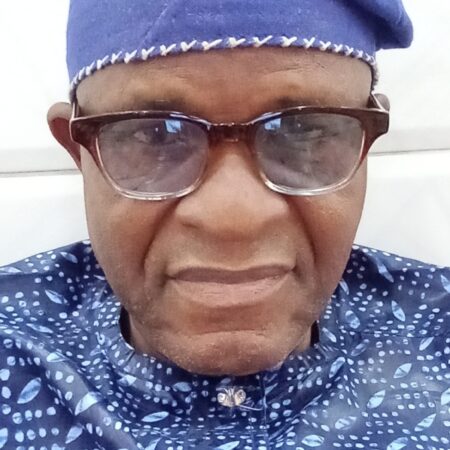
Suleiman Aremu, CEO/Publisher, Solaremnews, writes from Ilorin




No Comment! Be the first one.