




By Suleiman Aremu | Solaremnews | Thursday, 1 October 2026
President Bola Ahmed Tinubu has declared that Nigeria has passed through its own “Red Sea” following three years of economic reforms, saying the country is now entering an era of prosperity and shared economic opportunities.
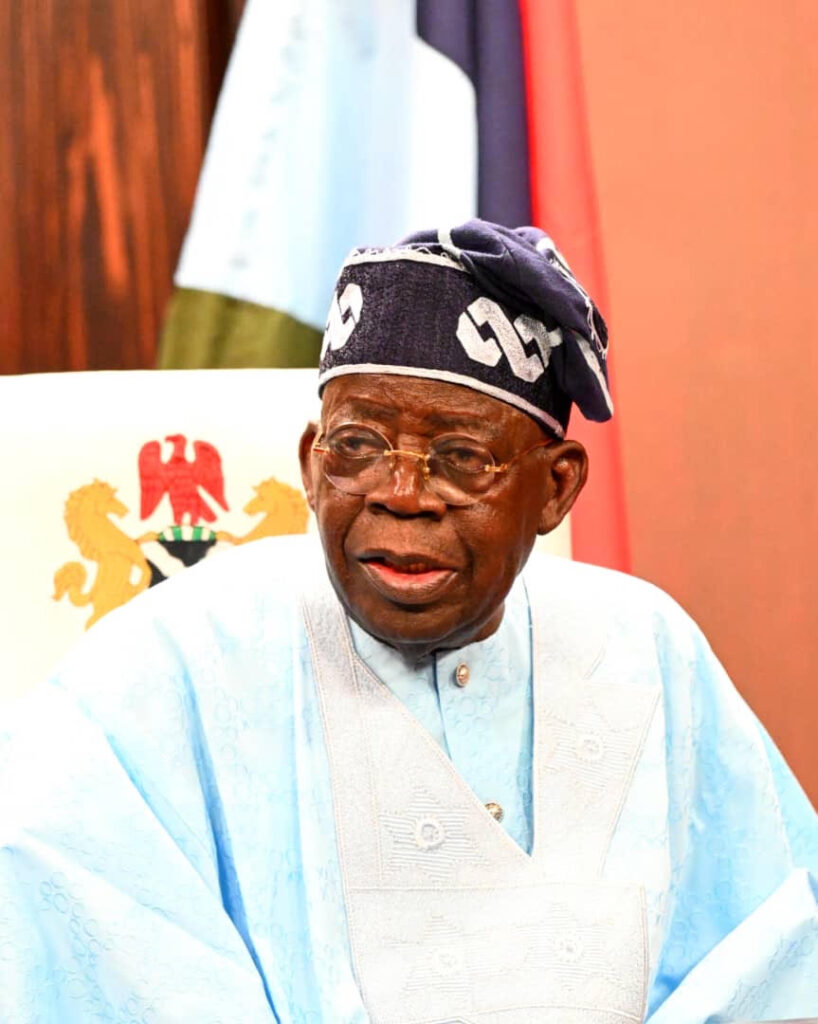
Tinubu made the declaration in his Independence Day address to Nigerians on Thursday, marking the 66th anniversary of the country’s independence. The address was delivered under the theme, “From Reforms to Prosperity.”
The President said Nigeria’s journey since independence had been characterised by periods of hope and disappointment, including civil war, military rule, economic crises, insecurity and political upheaval.
He, however, said the country had endured because of the resilience and determination of Nigerians, including farmers, traders, teachers, entrepreneurs and members of the Armed Forces and security services.
Tinubu said the independence of Nigeria carried a broader promise than the attainment of sovereignty, stressing that the country’s founding fathers envisaged a nation where citizens would have the freedom to shape their destiny and enjoy opportunity, dignity and a better life.
According to him, Nigeria’s economic difficulties had been worsened over the years by decisions that postponed difficult reforms and allowed structural distortions to deepen.
He likened the situation inherited by his administration in 2023 to that of a patient diagnosed with cancer, saying difficult treatment was necessary to address the underlying problem rather than merely managing its symptoms.
“For too long, Nigeria’s leaders chose morphine while praying for a miracle that never came,” Tinubu said, arguing that previous administrations had sustained inefficient arrangements instead of confronting the underlying economic problems.
He said his administration therefore decided to undertake difficult reforms, acknowledging that the measures had brought real hardships and side effects for Nigerians.
The President, however, maintained that the reforms did not create the weaknesses in the economy but were introduced to address them.
He urged Nigerians to resist calls to abandon the reforms and return to what he described as unsustainable subsidy arrangements, saying the country had already made significant progress.
Economic Outlook Improved, Tinubu Says
Tinubu said Nigeria’s economic outlook had improved significantly three and a half years after his administration commenced its reform programme.
He stated that the economy had grown by more than four per cent in 2026, with both the oil and non-oil sectors contributing to the renewed period of growth.
The President also said oil theft had declined, inflation had fallen substantially from its peak, foreign reserves had been rebuilt and the foreign exchange market had stabilised.
According to him, Nigeria also recorded its highest-ever revenue from non-oil exports in 2025, exceeding $6 billion.
He described the figure as evidence of increased economic activity by Nigerian businesses, adding that international observers, journalists, non-governmental organisations and multilateral institutions had also recognised improvements in the country’s economic stability and resilience.
Tinubu further said foreign direct investment was continuing to rise, describing the private sector’s response as evidence of increased confidence in the Nigerian economy.
He said the country had now reached a turning point, with the government’s central economic task shifting from correcting the nation’s economic course to delivering shared and widespread prosperity.
Focus Shifts to Cost of Living
The President said the immediate priority of his administration was to reduce the cost of living by lowering the cost of producing and transporting goods and services.
He said the government would expand mechanised irrigation and dry-season farming, improve access to seeds and fertiliser, increase agricultural mechanisation and invest in storage and transportation.
He also highlighted ongoing investments in roads, railways and ports, saying improved infrastructure would help connect farms and factories to markets.
Tinubu explained that reducing production and transportation costs would ultimately reduce the prices of goods available to consumers.
He said the government would also focus on improving electricity supply to manufacturers, strengthening competition and creating an environment where businesses could operate more efficiently.
Jobs, Industrialisation Take Centre Stage
The President said productive employment and industrial growth would remain central to the next phase of his administration’s economic programme.
According to him, Nigeria’s large youth population represents an economic opportunity that must be harnessed through jobs, skills, entrepreneurship and industrial development.
He said the government would use the country’s gas resources to power new industries, support the revival of factories in major industrial centres and expand digital connectivity to communities that had been excluded from the modern economy.
Tinubu also promised increased investment in skills development and support for Nigerian businesses through infrastructure and financing.
He expressed his desire to see more Nigerians manufacturing goods, more farms producing food for cities and factories, and more Nigerian companies exporting locally produced goods to international markets.
The President also said he wanted young Nigerians to build globally competitive technology companies and create employment opportunities within the country.
Social Support Programmes to Continue
Tinubu acknowledged that millions of Nigerians were still struggling with food, school fees, medical bills and transportation costs.
He said the challenges faced by vulnerable Nigerians were not solely the result of the reforms introduced by his administration, but were accumulated over decades as a result of low productivity, inadequate infrastructure, limited opportunities and institutional weaknesses.
He said the government could not erase in four years problems that had accumulated over generations but could change the country’s direction and create an economy capable of lifting people out of poverty.
The President said his administration was therefore strengthening direct support for the poorest households and improving the National Social Register to ensure that assistance reached people who genuinely needed it.
He also highlighted the role of the Nigerian Education Loan Fund in enabling students from low-income families to pursue higher education.
Tinubu said the Credit Access for Nigerians, through CREDICORP, was also providing consumer credit to working Nigerians seeking to acquire vehicles, solar systems, digital devices and other essential assets.
He added that the Federal Government, in collaboration with state and local governments, would continue strengthening primary healthcare, basic education and other essential public services.
The President also stated that salaries and pensions had been paid on time and in full since 2023, while the national pension programme had been reformed to benefit retirees and vulnerable Nigerians.
He stressed that the social intervention programmes were not intended to replace economic prosperity but to provide a bridge for vulnerable citizens as the economy expands.
“Our objective is not to manage poverty more efficiently. We will defeat it,” Tinubu declared.
“The Age of Prosperity”
Tinubu said eliminating poverty would require time, discipline, sustained economic growth and the creation of millions of productive opportunities across the country.
He maintained that Nigeria was entering the next phase of its development from a position of greater economic strength because, according to him, the difficult reforms had corrected the country’s economic direction.
“The age of reform has done its work. Now begins the age of prosperity,” he said.
The President said the next phase should ensure that the promise of Nigeria became a lived reality for citizens across different walks of life.
He acknowledged that the road ahead would continue to demand sacrifices but expressed confidence in Nigerians and the country’s future.
Tinubu described Nigerians as the true strength of the nation, praising the courage, determination and hard work of ordinary citizens.
He said the country had now established a clearer direction and stronger foundation for future development.
“We Have Passed Through Our Own Red Sea”
In a reference to the biblical account of the Israelites crossing the Red Sea, Tinubu said Nigeria had passed through its own difficult period and should now move forward without looking back.
“Nigeria has corrected its course. We have passed through our own Red Sea. This is not the time to look back. Let us go forward together, with faith in ourselves, faith in our country, and faith that the sacrifices we have made will yield their reward.”
He described the “Promised Land” ahead as a Nigeria of abundance and opportunity, where prosperity would be broadly shared and every child could dream beyond the circumstances of birth.
“Our destination is in sight. Our foundations are strong. Our direction is clear. So let us go forward. No looking back,” the President said.
Tinubu concluded his Independence Day address by wishing Nigerians a happy Independence Day and asking for God’s blessings upon the citizens and the Federal Republic of Nigeria.




No Comment! Be the first one.