




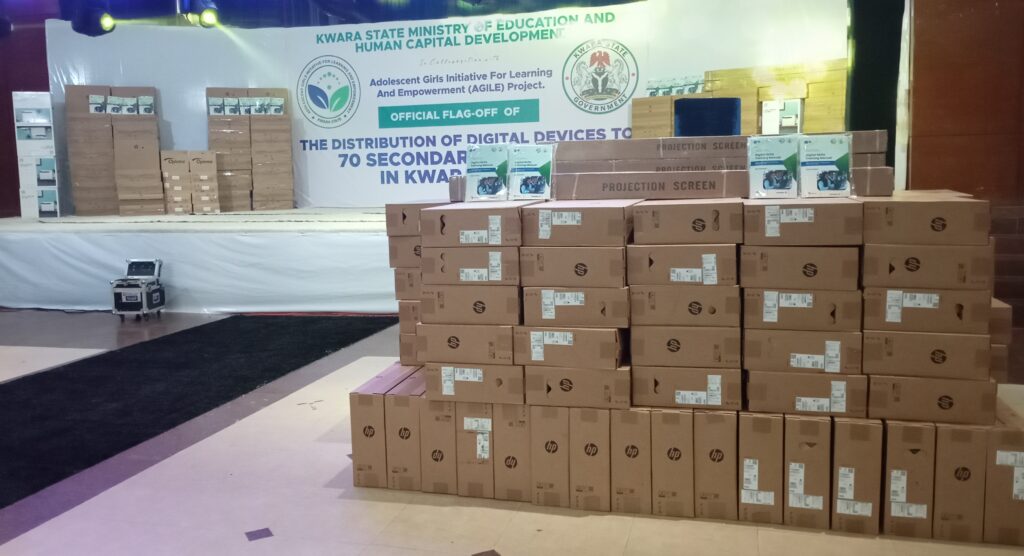
Initiative under AGILE Project provides 1,755 desktop computers, 70 printers, projectors, solar power systems, internet connectivity for schools
By Suleiman Aremu | Solaremnews
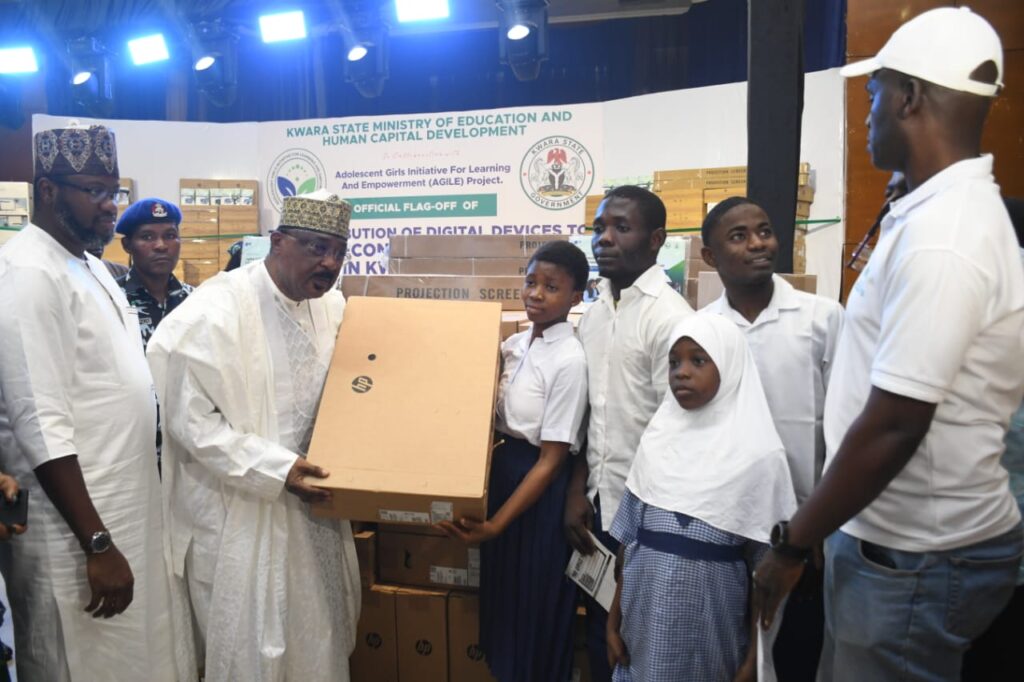
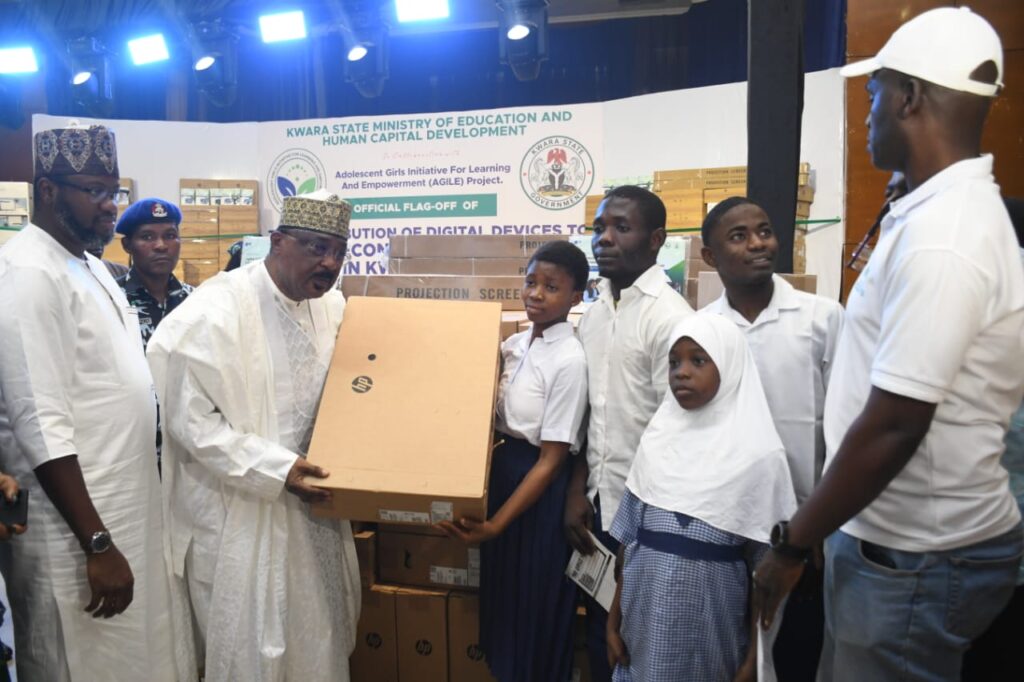
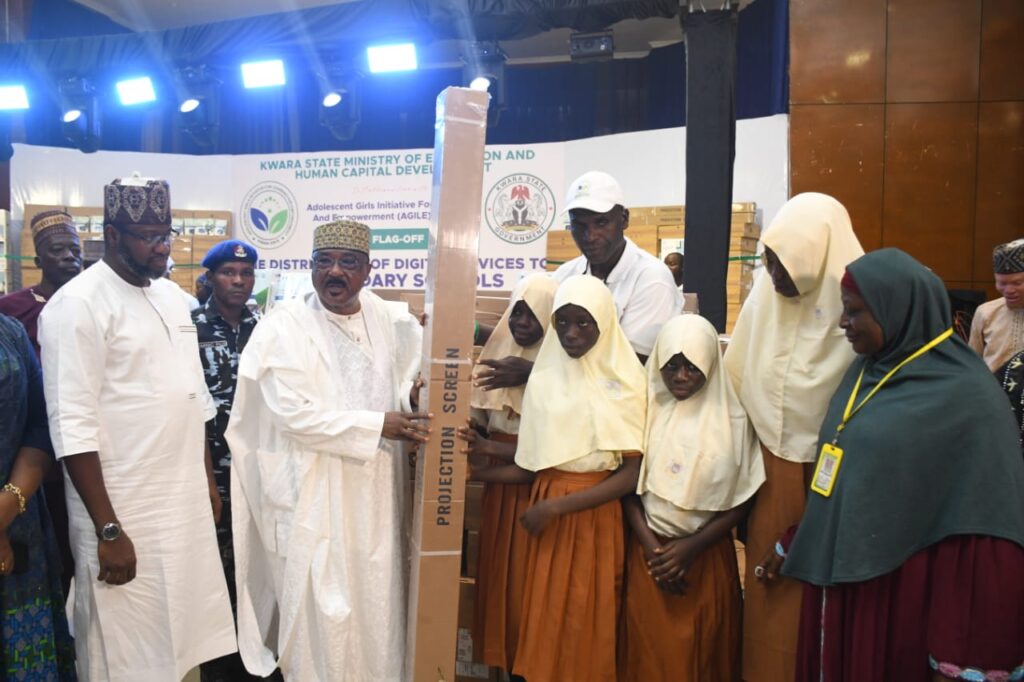
The Kwara State Government has flagged off the distribution of digital devices to 70 secondary schools across the 16 Local Government Areas of the state as part of efforts to strengthen digital learning, improve education outcomes and prepare students for the demands of the 21st-century economy.
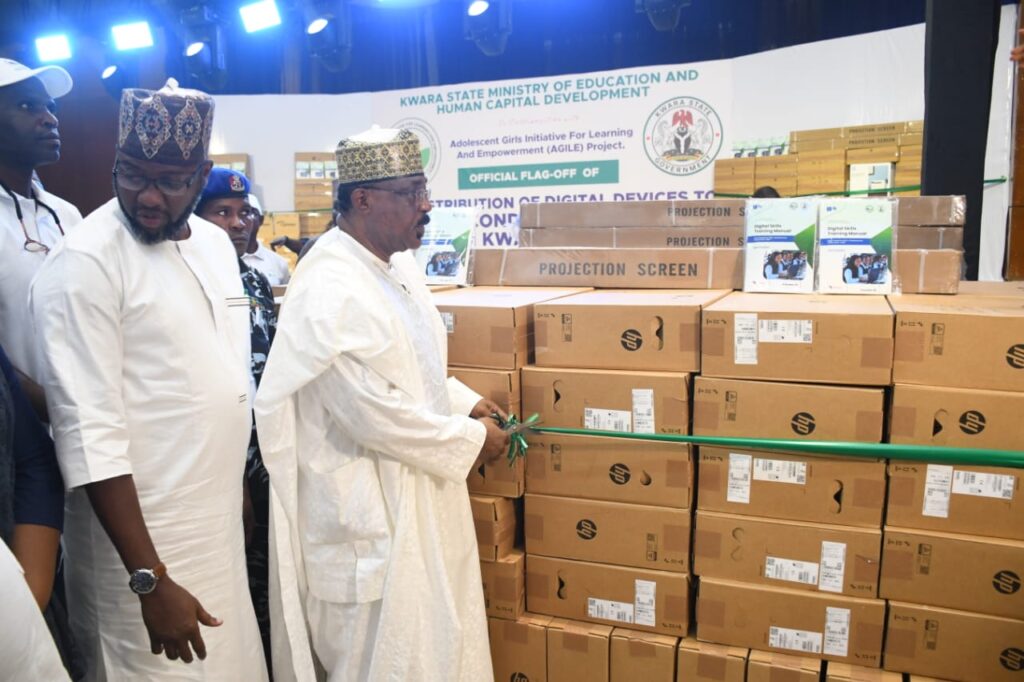
The flag-off ceremony, held at the State Banquet Hall, Ilorin, on Friday, was performed by the Deputy Governor, Elder Kayode Alabi, who represented the Executive Governor, Mallam AbdulRahman AbdulRazaq (CON).
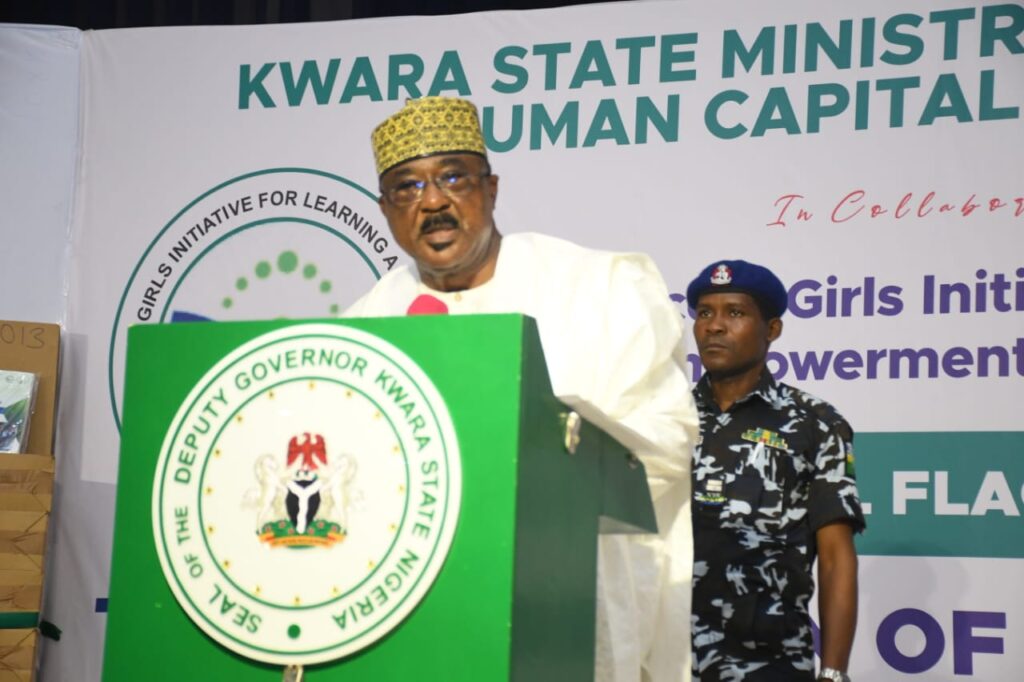
Speaking at the event, Alabi described the initiative as another practical demonstration of the administration’s commitment to transforming education through innovation, technology and strategic investment in human capital.
He said the government was not merely distributing digital devices but equipping students with the tools required to compete and excel in an increasingly digital and knowledge-driven world.
The Deputy Governor said the initiative was being implemented under the Adolescent Girls Initiative for Learning and Empowerment (AGILE) Project, designed to improve access to safe and quality secondary education for adolescent girls while promoting an inclusive, technology-driven learning environment for all students.
According to him, digital literacy has become a necessity rather than a luxury, stressing that the future belongs to young people who can leverage technology to solve problems, create opportunities and contribute meaningfully to society.
Alabi commended the Ministry of Education and Human Capital Development, the Kwara AGILE State Project Steering Committee and other stakeholders for their collaboration in making the initiative possible.
He urged the beneficiary students to make responsible and productive use of the devices, saying they should serve as instruments for learning, creativity, innovation and self-development.
He also charged school principals and teachers to ensure that the devices were effectively integrated into classroom teaching and learning, while maintaining proper accountability and ensuring their protection and maintenance.
“These are valuable public assets, and their sustainability depends on our collective responsibility,” he said.
The Deputy Governor assured residents that the state government would continue to pursue policies and programmes aimed at expanding access to quality education, promoting gender inclusion, strengthening digital learning and ensuring that no child was left behind.
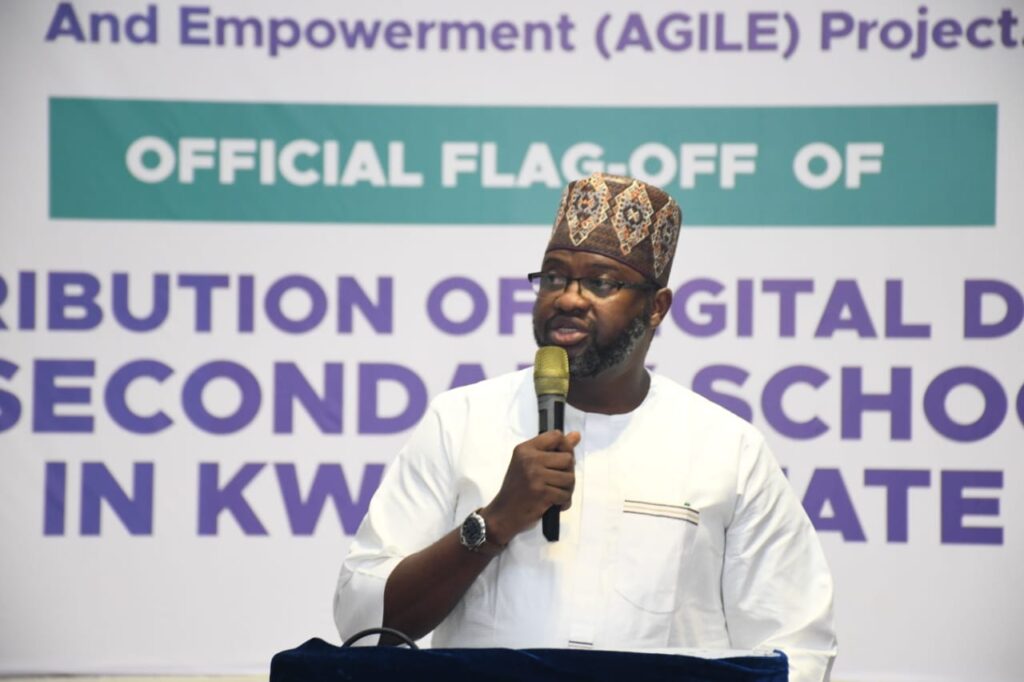
In his opening remarks, the Commissioner for Education and Human Capital Development, Dr. Lawal Olohungbebe, said the flag-off represented a significant milestone in the state’s efforts to prepare students, particularly girls, for the opportunities and challenges of the 21st century.
Olohungbebe expressed appreciation to Governor AbdulRazaq for his efforts towards transforming the education sector and strengthening human capital development in Kwara State.
He disclosed that the digital devices procured under the Digital Literacy Skills Sub-Component of the Kwara AGILE Project comprised 1,755 all-in-one desktop computers, 70 printers, 70 projectors and 70 motorised projector screens for distribution to the 70 beneficiary secondary schools.
He added that each of the schools had also benefited from a 10 KVA solar power system, internet connectivity and closed-circuit television (CCTV) cameras, while three teachers from each school had been trained.
The Commissioner described the investment as not only an investment in the state’s education system but also in the future of its children.
He said the facilities would provide teachers and students with improved opportunities to integrate technology into teaching and learning, access educational resources, develop digital competencies and cultivate creativity and problem-solving skills.
Olohungbebe, however, stressed that the provision of equipment was only the beginning, urging school managements and host communities to take ownership of the facilities and ensure that they were used for their intended educational purposes.
He equally encouraged teachers to embrace technology as a tool for improving classroom instruction and urged students to maximise the opportunities provided by the initiative.
The Project Coordinator of Kwara AGILE, Mr Adeshina Salami, said the event was a testimony to the state government’s commitment to strengthening education and human capital development through technology.
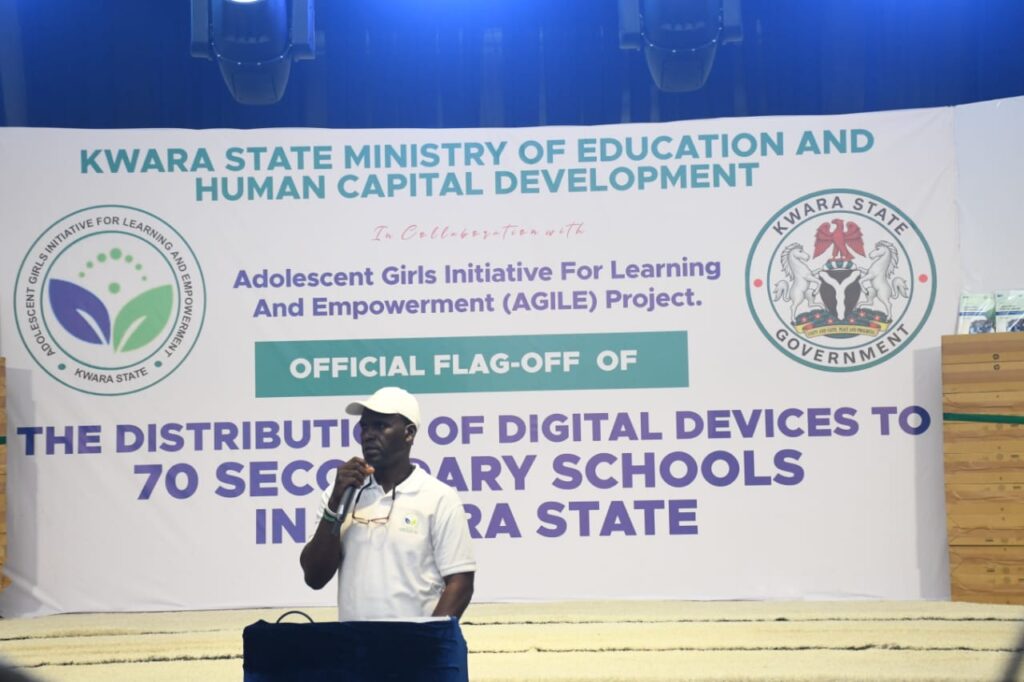
Salami appreciated Governor AbdulRazaq, the Deputy Governor, the Commissioner and members of the State Project Steering Committee for their support towards the successful implementation of the AGILE Project.
Also speaking, the Digital Skills Subcomponent Lead of the Kwara AGILE Project, Oladayo Jamiu Onaolapo, said the initiative was aimed at equipping secondary school girls with digital skills that would make them self-reliant and enable them to compete favourably in the rapidly expanding digital economy after secondary education.

Onaolapo noted that the initiative would move students beyond learning about computer components and their functions theoretically on the chalkboard to gaining practical digital skills.
He described the flag-off as the most noticeable landmark achievement recorded so far under the Digital Skills Subcomponent of the Kwara AGILE Project.
He listed other achievements to include the development and production of digital skills training manuals for trainers and students, the training of 210 teachers through Master Trainers and Cascade Training workshops, and the transcription of the student digital skills manual into Braille for visually impaired students as part of efforts to promote inclusive education.
According to him, the Braille initiative was recognised at both the national AGILE and World Bank levels, while the Kwara AGILE digital skills success story was also featured in the National AGILE magazine.
Onaolapo stressed that digital skills had become indispensable in the modern world, saying there was no escape route for young people who wanted to remain relevant in an increasingly technology-driven society.
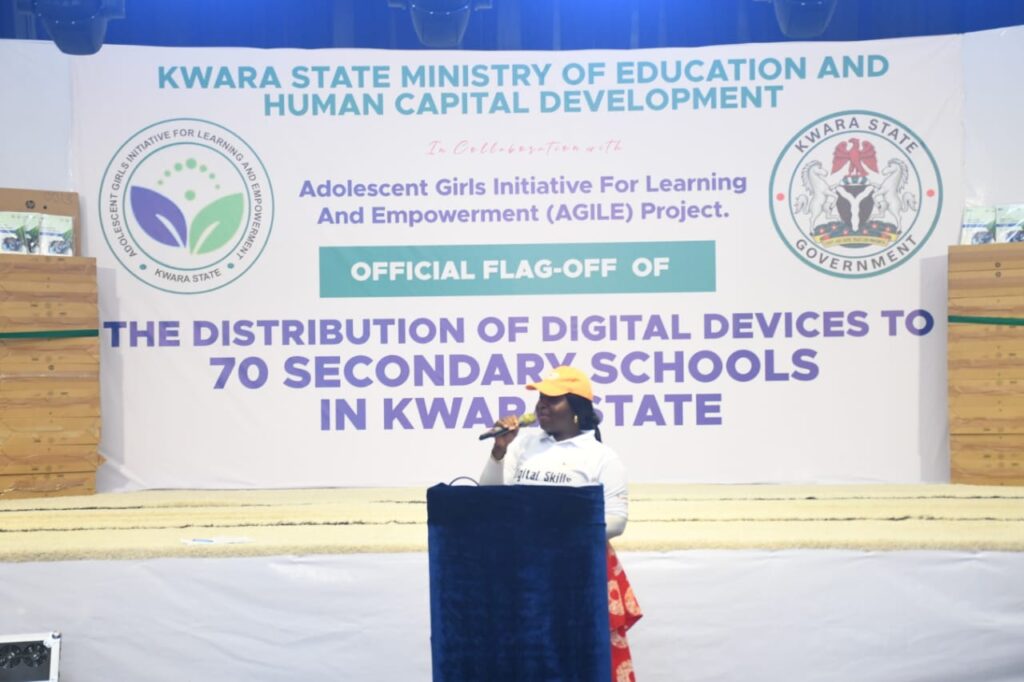
The Project Communications Officer, Ayobami Ashaolu, said Kwara AGILE had continued to receive strong backing from the state government, particularly in the areas of girls’ education and empowerment.
Ashaolu explained that the project was structured around various subcomponents addressing critical needs in girls’ education and empowerment.
She commended the Digital Literacy Officer, Jamiu Oladayo Onaolapo, for his proactive approach and close collaboration with principals and Master Trainers across the 70 beneficiary schools to ensure the success of the digital literacy component.
Students, teachers and representatives of the beneficiary schools expressed appreciation to the state government for the initiative, describing the provision of the digital facilities as an important step towards improving teaching and learning and exposing students to practical digital skills.
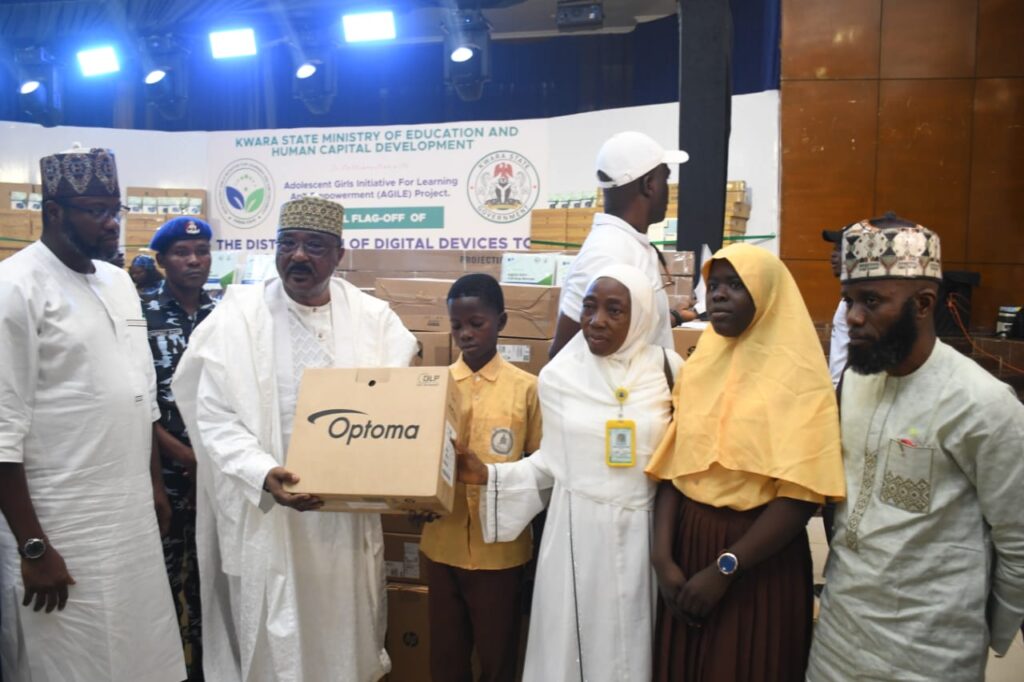
The stakeholders also called for sustained maintenance, responsible use and effective integration of the facilities into the schools’ academic activities to ensure that the investment achieves its intended objectives.
The initiative, according to the speakers, is expected to strengthen digital literacy among students, enhance the capacity of teachers and create a more technology-driven learning environment across the beneficiary schools in all 16 Local Government Areas of Kwara State.






No Comment! Be the first one.