




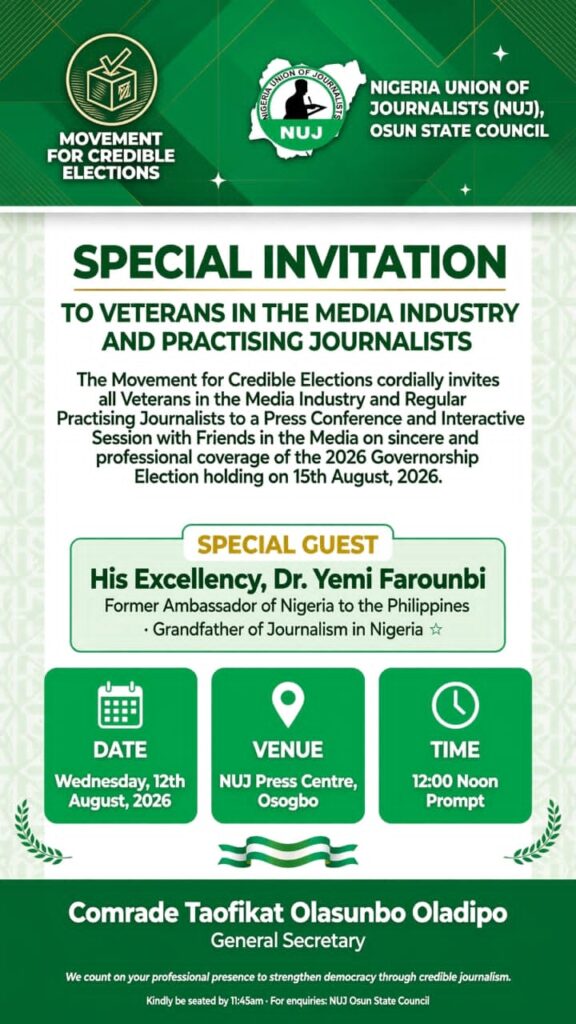
Group says credible August 15 poll will strengthen public confidence, provide lessons for 2027 elections
By Suleiman Aremu | Solaremnews
The Movement for Credible Elections (MCE), Osun State Chapter, has urged journalists and media organisations to uphold professionalism, impartiality, accuracy and factual reporting before, during and after the August 15, 2026 Osun State governorship election.
The group made the call on Wednesday at a press conference and interactive session with veteran journalists and practising media professionals at the Nigeria Union of Journalists (NUJ) Press Centre, Osogbo.
Speaking on the theme, “The Role of the Media in Ensuring Sincere and Professional Coverage for Credible 2026 Osun Governorship Election,” the Osun State Coordinator of MCE, Comrade Lanre Fadahunsi, said the media had a critical responsibility to ensure that the election was accurately and professionally reported.
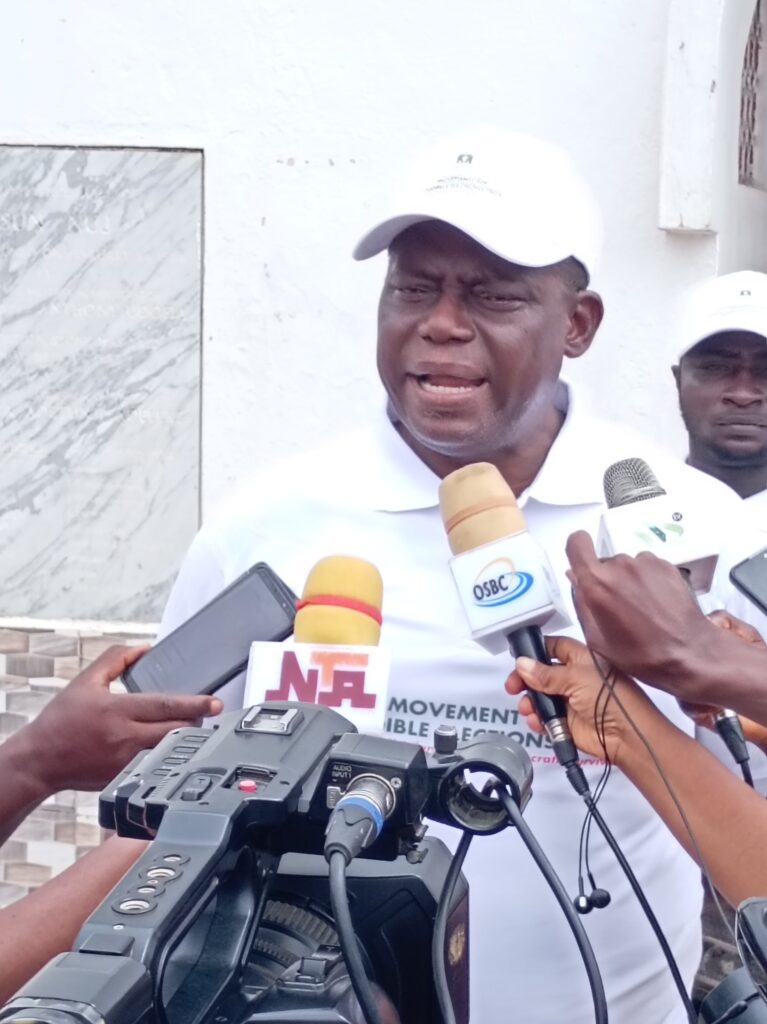
Fadahunsi described journalists as “the conscience of society” and important stakeholders in the democratic process, stressing that their responsibility went beyond merely observing and reporting events on election day.
He explained that MCE was conceived as a national democratic intervention platform under the National Consultative Front (NCFront), established under the leadership of Chief Olisa Agbakoba, Senior Advocate of Nigeria, and subsequently steered by Professor Pat Utomi.
According to him, the movement was established as a Third Force platform rather than a political party, with the objective of promoting positive, competent and capacity-driven leadership across Nigeria.
Fadahunsi also acknowledged the contributions of veteran Comrade Olawale Okunniyi, popularly known as Che Wale, to democratic interventions associated with the NCFront, Big Tent and Labour Movement, as well as the Patriots platform led by former Commonwealth Secretary-General, Chief Emeka Anyaoku.
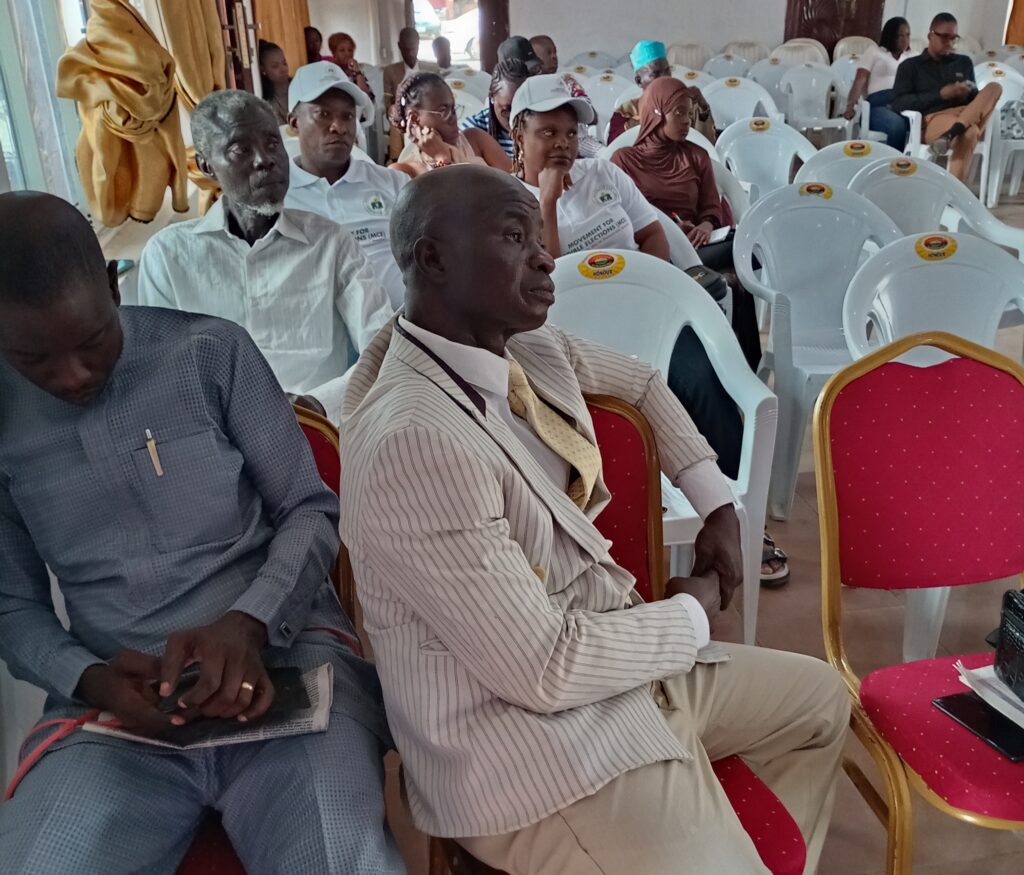
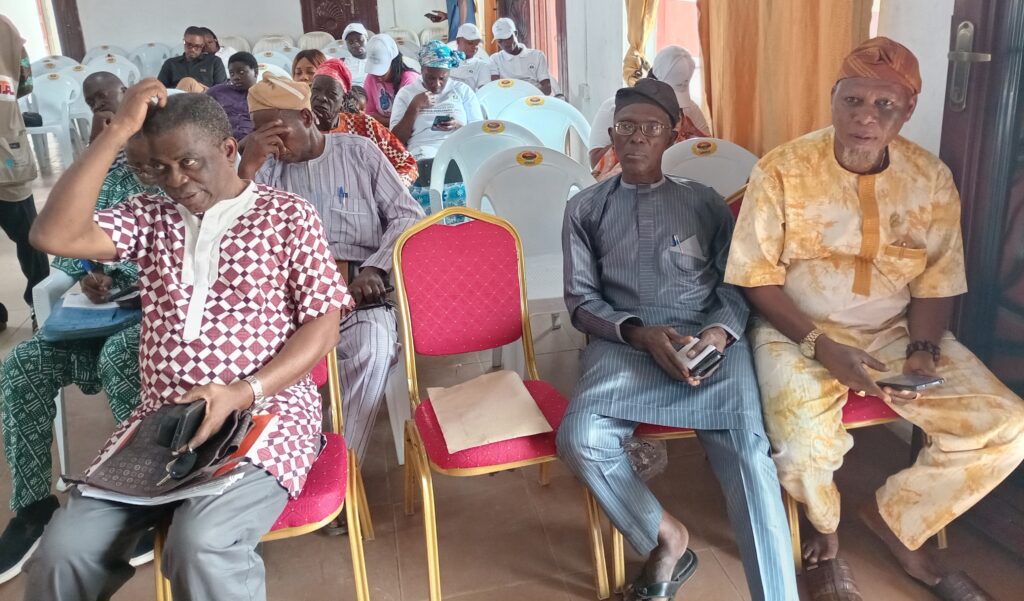
He said the Osun intervention was part of the broader patriotic effort to promote credible elections and strengthen democratic institutions in Nigeria.
The MCE coordinator expressed concern over the credibility challenges that had characterised some Nigerian elections, noting that such developments had affected the country’s democratic image and could undermine investor confidence and political legitimacy.
He stressed that credible elections could not be achieved by chance, but required deliberate and coordinated efforts by electoral institutions, security agencies, political parties, candidates, the media and voters.
Fadahunsi cited the experiences of countries including Kenya, Côte d’Ivoire, Ghana, Botswana and South Africa as examples of the consequences of electoral credibility, as well as the benefits of allowing citizens’ votes to determine who governs them.
He particularly highlighted Ghana’s reputation for relatively credible elections and peaceful transfers of power as a model from which Nigeria could learn.
He said Nigeria must move away from a situation where elections were associated with violence, manipulation and distrust, towards an electoral system in which voters were confident that their votes would count.
On the Osun election, Fadahunsi said the history of governorship contests in the state, particularly the contentious 2014 and 2018 elections and the legal battles that followed, made the August 15 poll particularly significant.
He identified unresolved pre-election litigation and eligibility issues as some of the developments capable of creating tension and uncertainty ahead of the election.
He also referred to the controversy surrounding local government allocations in the state, urging journalists to report the matter objectively and base their reports on facts rather than sentiments.
Another major concern raised by the group was vote buying, which Fadahunsi described as a serious threat to the people’s right to freely choose their leaders.
He argued that poverty should not be exploited to influence voters, maintaining that exchanging money for votes amounted to economic coercion and deprived citizens of the opportunity to make independent electoral choices.
He therefore urged journalists to expose vote buying, intimidation and electoral violence whenever they occurred, while ensuring that reports were properly verified before publication or broadcast.
Fadahunsi described the August 15 governorship election as an important rehearsal for the 2027 general elections, saying its conduct and outcome would provide valuable lessons for Nigeria’s electoral system.
“What happens in Osun on August 15th, 2026, is not just about Osun. A credible off-cycle election in Osun portends great lessons and sets the tone for the 2027 General Elections in Nigeria.”
He added that if Osun could achieve a credible election through professional media coverage, transparency by the Independent National Electoral Commission (INEC), neutrality by security agencies and resistance by voters to vote buying, the state could provide a useful template for the 2027 elections.
The movement consequently charged journalists to remain factual, balanced and non-partisan in their coverage and warned against amplifying fake news, rumours and unverified election results.
It also urged media practitioners to give adequate attention to the experiences and concerns of ordinary voters rather than focusing exclusively on political heavyweights and the highest spenders.
The group announced plans to establish situation rooms and work with the NUJ to document incidents before, during and after the election.
The event also featured veteran journalist and former Nigerian Ambassador to the Philippines, His Excellency Dr Yemi Farounbi, whom the organisers described as the “Grandfather of Journalism in Nigeria”.
The organisers said Farounbi’s extensive experience in election coverage, particularly from an era when journalism was conducted without the internet and modern digital platforms, would provide valuable guidance to contemporary journalists covering the Osun election.
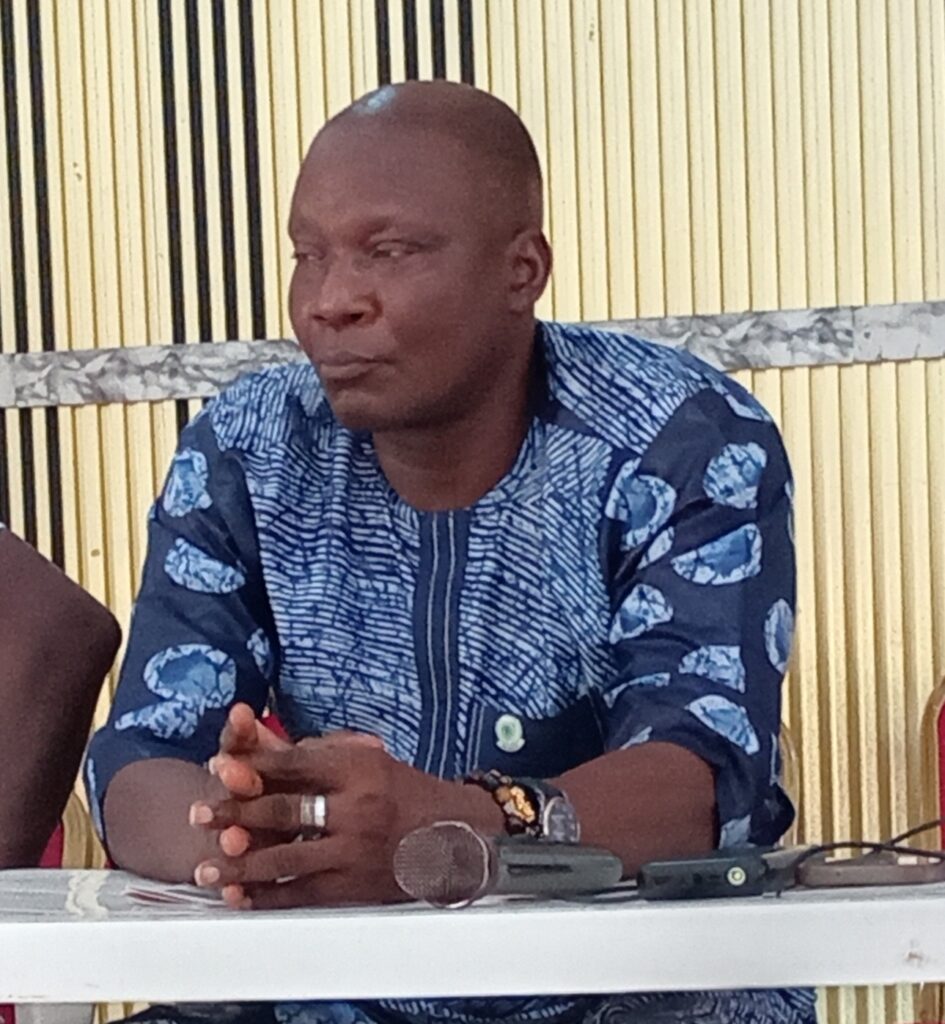
In his closing remarks, the Chairman of the Osun State Council of the NUJ, Mr Adeyemi Aboderin, urged journalists covering the election to make their safety a priority.
Aboderin advised journalists to leave any area where they perceived danger, stressing that “life is matter” and that no election assignment was worth risking their lives.
He also urged journalists to strictly adhere to professional journalism guidelines in reporting the Osun governorship election and wished all media practitioners a safe and successful coverage of the poll.
The Movement for Credible Elections said media practitioners must see their responsibility beyond reporting election-day events, stressing that professional journalism could help prevent misinformation, reduce tension and strengthen public confidence in the electoral process.
The group called on all stakeholders to work towards an election in which votes, rather than violence or inducement, would determine the outcome.
It urged journalists to help ensure that Osun State records an election where the focus would be on counting ballots rather than counting casualties.
The press conference was organised by the Osun State Chapter of the Movement for Credible Elections in collaboration with stakeholders in the media community ahead of the August 15, 2026 governorship election.




No Comment! Be the first one.