




Group flags BVAS technical challenges, late inclusion of SDP, voter inducement, violence; deploys 332 observers to verify poll, results
By Suleiman Aremu | Solaremnews
Yiaga Africa has raised concerns over the readiness of key stakeholders for the August 15, 2026 Osun State governorship election, warning that the poll will be a defining test of electoral preparedness, security neutrality and public trust ahead of the 2027 general elections.
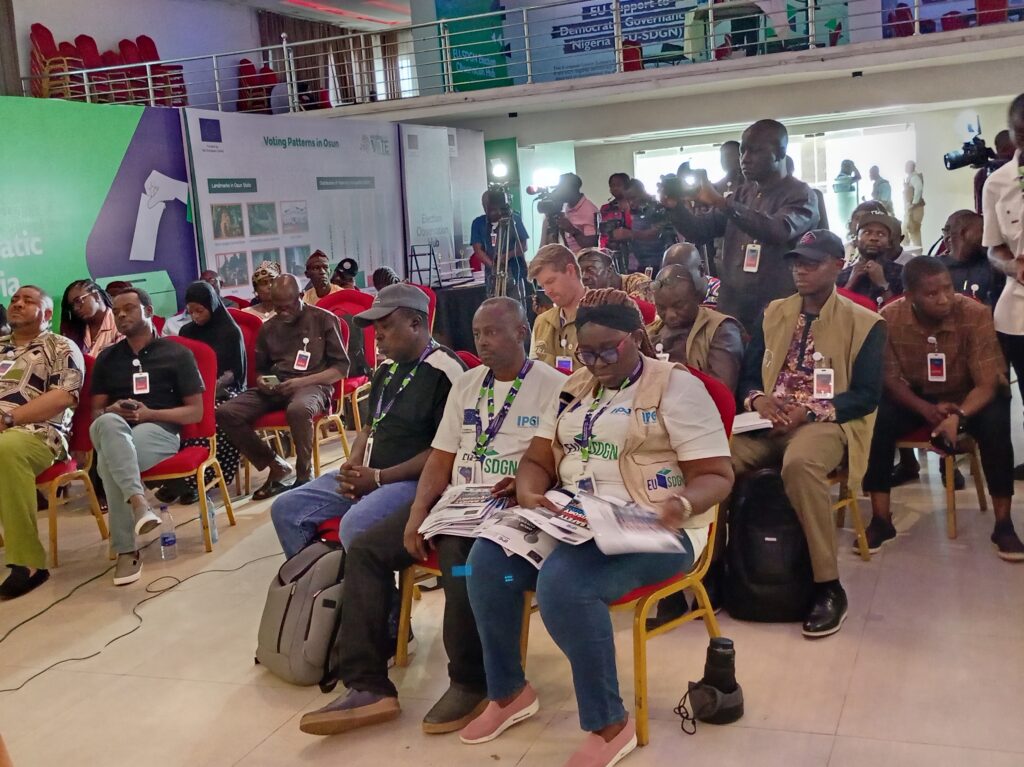
The civil society organisation, through its Watching The Vote (WTV) initiative, said the election would test the operational readiness of the Independent National Electoral Commission (INEC), the professionalism and neutrality of security agencies, the conduct of political parties and candidates, as well as the ability of voters and other stakeholders to operate effectively under the new Electoral Act 2026.
In a pre-election assessment released ahead of Saturday’s poll, Yiaga Africa said the election would also provide an important opportunity to assess the implementation of new electoral innovations, including the use of downloadable Permanent Voter Cards (PVCs) for accreditation and the electronic EC8A results management and validation process.
According to the organisation, WTV commenced its Pre-Election Observation (PREO) exercise in July 2026 to assess electoral preparedness, campaign activities and emerging security threats across the state.
It noted that INEC had made significant progress in its preparations, including PVC distribution across Registration Areas and INEC Local Government Area offices, recruitment and training of election officials, stakeholder engagement, BVAS configuration and mock accreditation exercises.
INEC is expected to conduct the election in 3,763 polling units across the 30 Local Government Areas of Osun State, with 4,427 Bimodal Voter Accreditation System (BVAS) devices deployed.
A total of 2,339,233 registered voters are eligible to participate in the election, while 15 political parties have fielded candidates.
Yiaga Africa, however, expressed concern over the limited representation of women, youths and persons with disabilities in the contest, noting that only one of the 15 governorship candidates is a woman, while none publicly identifies as a person with disability.
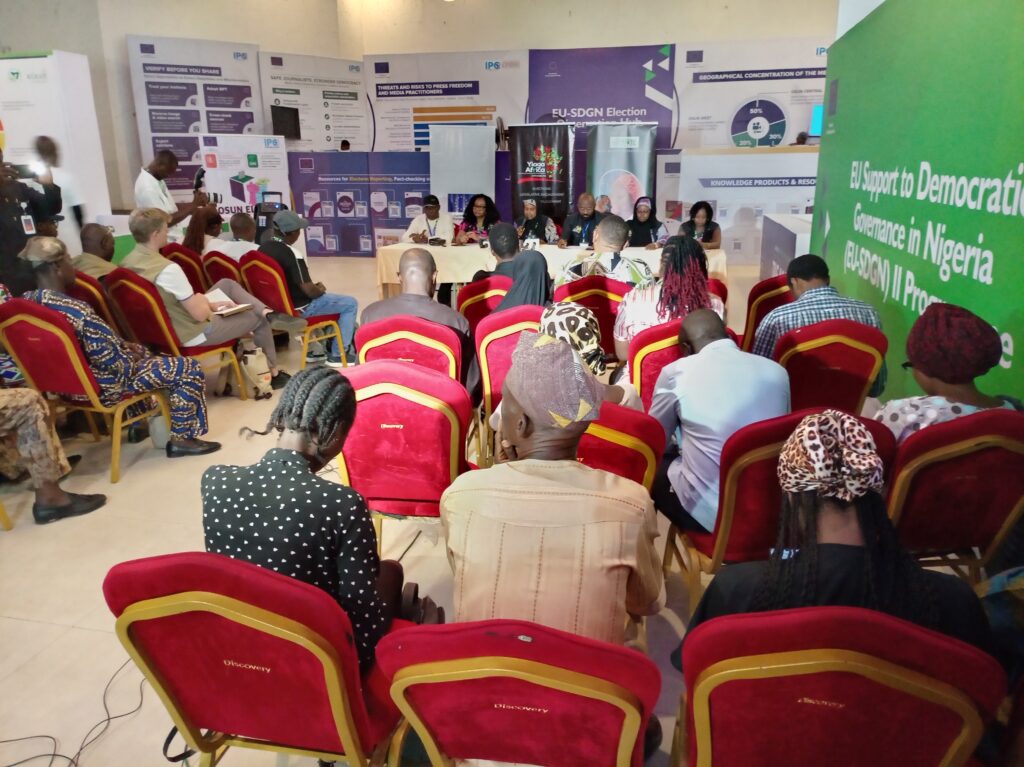
The organisation urged political parties to reform their candidate nomination processes to promote meaningful inclusion of women, young people and persons with disabilities in future elections.
On electoral preparedness, Yiaga Africa said although INEC had completed most of its pre-election activities, the real measure of readiness would be the Commission’s performance on Election Day.
It urged INEC to ensure timely deployment of personnel and materials, reliable functioning of election technology, consistent application of the law and effective contingency arrangements to address unforeseen challenges.
The organisation said PVC collection was disrupted in Odo-Otin and Ife Central Local Government Areas, thereby limiting some voters’ ability to collect their cards.
While acknowledging INEC’s plan to allow affected voters to download electronic PVCs, it expressed concern that inadequate access to digital services could prevent some eligible voters from benefiting from the arrangement and potentially lead to voter disenfranchisement.
Yiaga Africa also raised alarm over growing security concerns ahead of the election, saying the nature of incidents recorded in the weeks preceding the poll suggested a shift from political rivalry and campaign-related violence to direct attempts to disrupt electoral activities and contest strategic public spaces.
It cited the attack on a PVC collection centre in Odo-Otin, politically linked violence in Osogbo and disputes over the control of motor parks as developments that had heightened the security risks surrounding the election.
The organisation further condemned what it described as an escalation in incendiary rhetoric and hate speech attributed to political actors.
It warned that inflammatory statements could legitimise violence, deepen partisan divisions and undermine confidence in the electoral process.
Yiaga Africa called on security and law enforcement agencies to investigate and prosecute cases of electoral violence, threats, hate speech and other related offences without regard to the political status, party affiliation or influence of suspects.
It stressed that selective enforcement of the law could reinforce perceptions of institutional bias and further erode public confidence in election security.
The group also expressed concern over technical challenges recorded during INEC’s mock accreditation exercise, particularly the failure of some BVAS devices to recognise voters’ fingerprints, facial features and older PVC records.
According to Yiaga Africa, INEC attributed some facial verification failures to an excessively high compatibility threshold affecting older voter data, particularly records that had not been revalidated.
It warned that unresolved technical problems could disenfranchise eligible voters, cause tension at polling units and undermine the credibility and legitimacy of the election.
The organisation also raised concerns over the late inclusion of the Social Democratic Party (SDP) candidate, Dr Francis Olugbenga Ajala, and his running mate, Faseke Babajimi Oladipo, following a Federal High Court judgment directing INEC to place the party on the ballot.
The court-ordered inclusion, according to Yiaga Africa, required the reprinting of ballot papers and result sheets, increasing the number of political parties on the ballot to 15.
The revised materials were expected to arrive in Osun on Thursday, August 13, for onward distribution to the 30 Local Government Areas.
Yiaga Africa said the development had disrupted INEC’s standard deployment schedule and compressed the time available for sorting and distributing sensitive election materials.
While acknowledging that compliance with court orders was mandatory, the organisation said last-minute judicial interventions could create significant operational pressure and increase the risk of delayed deployment, logistical errors and late commencement of voting.
On voter inducement, Yiaga Africa said it had documented the distribution of money and gift items by political actors, adding that although some of the activities were presented as social interventions or charitable support, their timing and proximity to political campaigns raised concerns about voter inducement and undue influence.
The organisation also said voter education remained uneven across the state despite increased activities by INEC, civil society organisations and the National Orientation Agency since July 1.
It noted that women-focused voter education activities were observed in only two Local Government Areas, youth-focused programmes in three, while interventions targeted at persons with disabilities were recorded in about half of the LGAs.
Yiaga Africa warned that pre-election violence, inflammatory rhetoric and distrust in the electoral process could depress voter turnout despite high political awareness and civic engagement among women, youths and persons with disabilities.
The group called on INEC to immediately resolve all outstanding technical problems with election technologies, particularly BVAS, and activate contingency logistics arrangements to mitigate the risks associated with the late arrival and redistribution of revised ballot papers and result sheets.
It also urged INEC to strengthen coordination within the Inter-Agency Consultative Committee on Election Security (ICCES) to ensure adequate protection for election officials at Registration Area Centres before their deployment to polling units.
The organisation called for strict compliance with the Electoral Act 2026 and INEC’s Regulations and Guidelines on results management, while urging the Commission to guarantee accredited political party agents, observers and journalists unhindered access to collation centres.
It further urged INEC to maintain effective communication with transport unions and companies engaged for election logistics and establish contingency arrangements in case any contracted transport provider withdraws or fails to deploy.
On security, Yiaga Africa urged security agencies to maintain strict neutrality and professionalism, sanction personnel who violate the rules of engagement and respect the rights of citizens, accredited observers and media practitioners, including freedom of movement on Election Day.
It also called for improved coordination between security agencies, the Economic and Financial Crimes Commission (EFCC) and the Independent Corrupt Practices and Other Related Offences Commission (ICPC) in tackling vote-buying and related offences.
Political parties and candidates were urged to abide by the terms of the Peace Accord, maintain peaceful engagement and call on their supporters to avoid violence.
Yiaga Africa equally called on political actors and their supporters to refrain from vote-buying and practices that compromise ballot secrecy and undermine the value of citizens’ votes.
The organisation urged civil society organisations to continue engaging with the electoral process, inspire public confidence and encourage citizens to participate in the election.
It also called on voters to resist attempts to buy their votes and exercise their franchise according to their preferences on August 15.
As part of its election observation deployment, Yiaga Africa said it would deploy its Watching The Vote methodology with support from the European Union under the EU Support to Democratic Governance in Nigeria Phase Two programme.
The organisation said its Election Observation Hub had also issued a Joint Pre-Election Assessment Report examining the political economy of the election, INEC’s preparedness, the media and information environment, participation of marginalised groups and risks capable of compromising the integrity of the poll.
On Election Day, Yiaga Africa said it would deploy 300 stationary observers to a representative random sample of polling units, supported by 32 mobile observers across all 30 Local Government Areas.
It said the observers would collect data on accreditation, voting and counting and independently verify the governorship results announced by INEC.
The organisation said its Process and Results Verification for Transparency (PRVT), formerly known as Parallel Vote Tabulation (PVT), would enable it to independently determine whether the official results correspond with ballots cast at sampled polling units.
Yiaga Africa also disclosed that it would deploy its Election Result Analysis Dashboard (ERAD 2.0), an independent citizen-led audit of results published by INEC on its Election Results Viewing (IReV) portal.
According to the organisation, ERAD 2.0 does not collate results or declare winners but tracks, verifies and visualises polling-unit result sheets already made publicly available.
It said the upgraded system would also monitor the performance of IReV, including availability, accessibility, downtime, timeliness and completeness of uploads, as well as the quality and condition of uploaded EC8A result sheets.
Yiaga Africa described the combination of PRVT and ERAD 2.0 as an end-to-end verification mechanism covering the election integrity chain from what happens at polling units to what INEC transmits and publishes on its results portal.
The organisation said the August 15 election would therefore serve as an important test of electronic results transmission under the Electoral Act 2026 and provide evidence on the effectiveness of the new results management framework.
The pre-election assessment was signed by the Chair of the 2026 Osun Election Observation Mission, Dr Asmau Maikudi, and Yiaga Africa Executive Director, Samson Itodo.







No Comment! Be the first one.