




By Suleiman Aremu | Solaremnews | Monday, October 26, 2026
Brazilian President Luiz Inácio Lula da Silva has won a historic fourth presidential term after defeating his right-wing challenger, Flávio Bolsonaro, in a closely contested presidential run-off election held on Sunday, October 25, 2026.
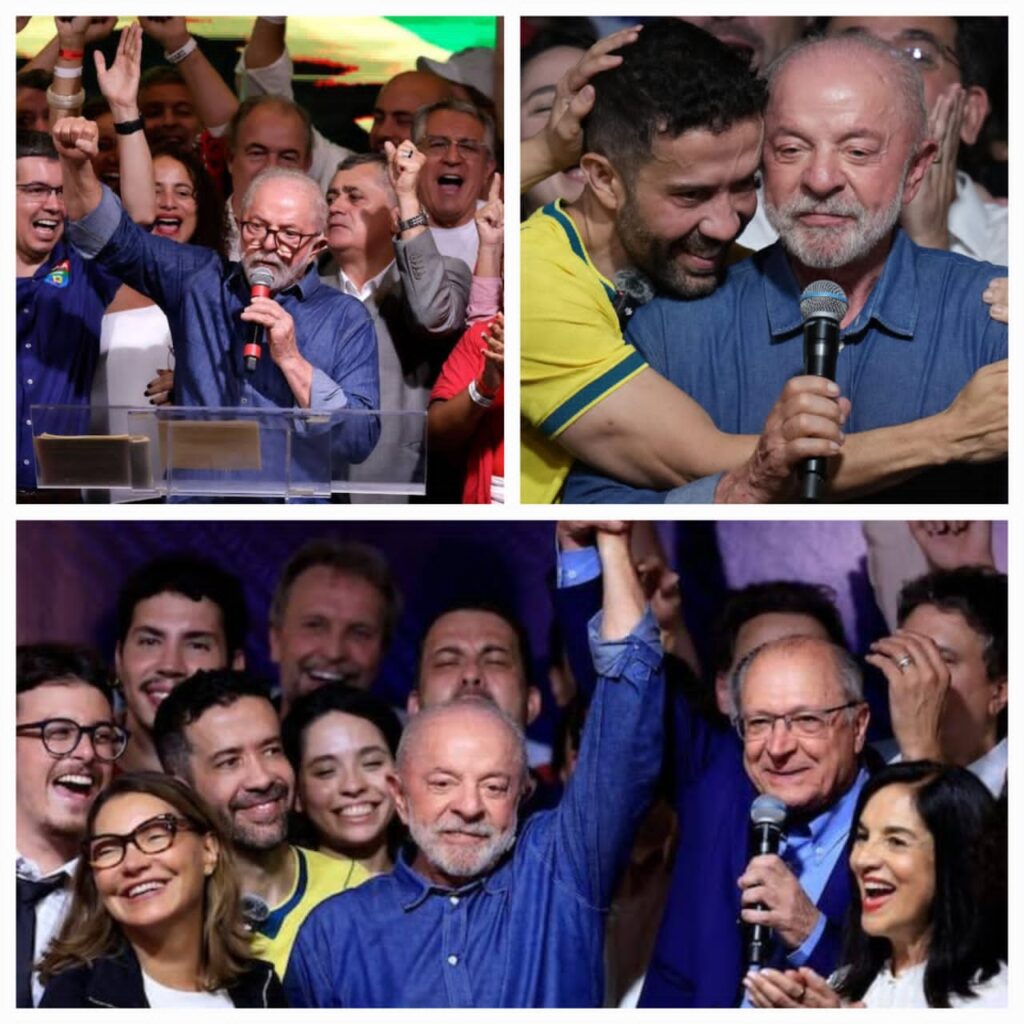
Lula, 80, secured 51.79 per cent of the valid votes, representing 64,256,232 votes, while Bolsonaro, the 45-year-old senator and son of former Brazilian President Jair Bolsonaro, received 48.21 per cent, equivalent to 59,826,041 votes, according to the country’s electoral authority.
The result, announced by Brazil’s Superior Electoral Court, marked a significant political comeback for Lula, who will return to the presidency for another four-year term after overcoming a strong challenge from the conservative opposition.
The victory also makes Lula the first Brazilian president to be elected to the country’s highest office four times, having previously won the 2002, 2006 and 2022 presidential elections.
His latest victory came after an intense campaign that exposed deep political divisions in Latin America’s largest country, with voters choosing between Lula’s left-wing political platform and Bolsonaro’s conservative movement.
Lula’s re-election followed a determined campaign in the final weeks of the contest, featuring increased mobilisation on social media and rallies across several cities. His supporters celebrated the outcome in major urban centres, including São Paulo, where crowds gathered to welcome the electoral result.
The president’s campaign focused on continuing social welfare programmes, improving workers’ living conditions, reducing poverty and hunger, and promoting economic development. His political career has long been associated with organised labour and policies aimed at improving the welfare of lower-income Brazilians.
Lula previously governed Brazil from 2003 to 2010 before returning to office in January 2023 after defeating Jair Bolsonaro in the 2022 presidential election.
His political comeback was particularly notable because he had spent time in prison following corruption convictions that were subsequently overturned, enabling him to return to electoral politics.
However, his fourth term is expected to present significant challenges, including managing public finances, addressing economic concerns and working with a Congress in which conservative lawmakers and allies of the Bolsonaro movement retain considerable influence.
Despite the official announcement of Lula’s victory, Flávio Bolsonaro has refused to concede defeat and indicated that he would seek to have the election annulled.
The opposition candidate questioned a decision that extended voting by two hours amid reported transportation difficulties and alleged irregularities. The extension became a major point of contention after the result was announced.
However, reports indicated that Bolsonaro’s own campaign had also requested additional voting time because of heavy rainfall in parts of southern Brazil.
The electoral dispute has raised concerns about the possibility of renewed political tensions in a country that experienced significant democratic instability following the 2022 election.
Jair Bolsonaro, Flávio’s father and a former president, was sentenced to 27 years in prison over a coup plot, according to reports. His supporters had previously challenged the outcome of the 2022 election, which Lula won.
Although Flávio Bolsonaro has threatened legal action, analysts cited in media reports consider an overturning of the result unlikely, given Lula’s margin of victory of more than four million votes.
Lula’s victory has attracted international attention, with leaders from several countries congratulating him on his re-election.
Among those who welcomed the result were Mexican President Claudia Sheinbaum, Canadian Prime Minister Mark Carney and French President Emmanuel Macron. The European Union also welcomed the outcome, while China and Russia expressed congratulations.
The reactions highlighted Brazil’s importance in international diplomacy, trade, environmental policy and multilateral organisations, including the BRICS grouping.
Lula has sought to strengthen Brazil’s international partnerships and promote cooperation on climate change, economic development and global governance.
His re-election is expected to influence Brazil’s relations with major world powers and its role in Latin American affairs.
Nevertheless, the political uncertainty surrounding Bolsonaro’s refusal to accept the result and concerns about Brazil’s fiscal outlook have also unsettled financial markets.
As Lula prepares for another term, expectations will be high for his administration to deliver on its promises to improve living standards, strengthen social protection and sustain economic growth.
He will also need to address public concerns over the cost of living, government spending, corruption and national security while navigating a politically divided Congress.
The election outcome represents a major moment in Brazil’s democratic history, extending Lula’s political longevity and giving his administration another opportunity to pursue its social and economic agenda.
With the electoral authority declaring him the winner, attention will now turn to the transition into his new term and the steps his government will take to address the country’s domestic challenges and international responsibilities.







No Comment! Be the first one.