





By Suleiman Aremu | Solaremnews | Monday, 14 September, 2026
The Nigerian National Petroleum Company Limited (NNPC Ltd.) has announced plans to activate multiple pathways aimed at transforming Nigeria into a global gas hub, leveraging the country’s vast natural gas resources to drive industrialisation, strengthen energy security and expand its presence in international markets.
The company’s Executive Vice President, Gas, Power & New Energy, Olalekan Ogunleye, disclosed this on Monday while speaking at the 2026 Gas Technology & Exhibition Conference (GASTECH) in Bangkok, Thailand.
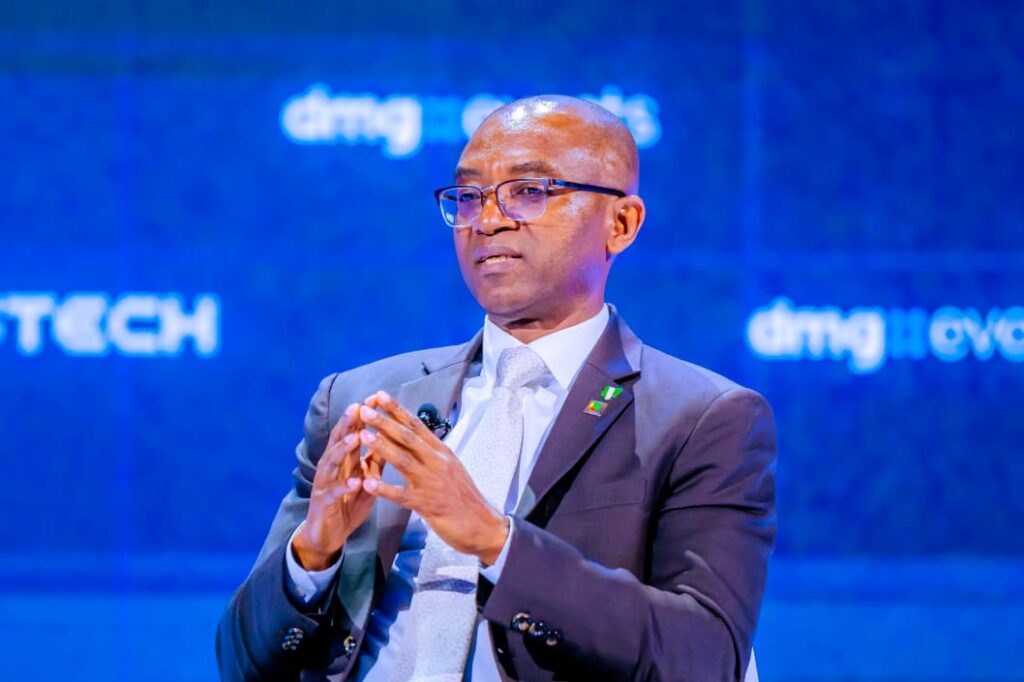
Ogunleye spoke during a panel session titled, “The New LNG Order: Leadership Strategies for Energy Security and Growth,” where he outlined Nigeria’s strategy for maximising its gas resources amid changing global energy dynamics, including geopolitical tensions and disruptions affecting energy supply and demand.
He said Nigeria would leverage its more than 215 trillion cubic feet (tcf) of proven natural gas reserves to support domestic industrialisation while simultaneously expanding the country’s export capacity.
According to him, gas development and monetisation in Nigeria is fundamentally a commercial venture, with NNPC Ltd. implementing a Gas Master Plan (GMP) designed to bridge the gap between the country’s current reserves position and its full gas potential.
“NNPC Ltd. is implementing a Gas Master Plan (GMP) engineered as a gap-to-potential tool to move Nigeria from a 215tcf reserves position to above 600tcf,” Ogunleye said.
He explained that the company’s strategy is anchored on stronger coordination and supported by the Petroleum Industry Act (PIA), the Decade of Gas Framework and the Gas Master Plan.
Ogunleye said the immediate objective was to increase Nigeria’s national gas production to 10 billion standard cubic feet per day (Bcf/d) by 2027, before raising it further to 12 Bcf/d by 2030.
He described the targets as part of broader efforts to unlock the country’s gas potential and establish a stronger foundation for both domestic consumption and international exports.
The NNPC executive vice president also highlighted Nigeria’s position as an established supplier of liquefied natural gas (LNG) to the global market, noting that the country is currently undertaking major expansion projects.
He cited the existing LNG Trains 1-6, which have a combined production capacity of about 22 million tonnes per annum (MTPA) and have exported more than 6,000 LNG cargoes since 1999.
He also pointed to Train 7, which is expected to be completed in 2027, as another major development that would strengthen Nigeria’s LNG production and export capacity.
According to Ogunleye, Nigeria’s geographical location gives it a significant advantage in the international gas market, particularly because the country is strategically positioned to serve both the Atlantic Basin and Asian markets.
He said the geographical advantage, combined with Nigeria’s substantial gas resources and renewed national focus on gas development, makes the country a strategic supplier to global energy markets.
Ogunleye further rejected the notion that Nigeria must choose between using its gas resources domestically and exporting them to generate foreign exchange.
He said the country had adopted a dual pathway that allows it to pursue both objectives simultaneously.
According to him, LNG exports will continue to provide foreign exchange earnings, while increased domestic gas utilisation will support industrial development, create employment opportunities and improve energy security.
He added that greater domestic utilisation of gas would contribute to improved economic wellbeing by providing industries and other users with a more reliable energy source.
The NNPC official also said Nigeria had taken steps to reduce the risks associated with new LNG investments through the establishment of a stronger legal and regulatory framework.
He noted that the framework is complemented by fiscal incentives designed to make gas projects more attractive to investors and financiers.
Ogunleye urged investors and financiers to take advantage of the opportunities emerging in Nigeria’s gas sector, particularly as the country continues efforts to improve security, establish competitive gas pricing and guarantee reliable gas supply.
“With continued efforts towards stable security, competitive gas pricing and assured gas supply, there is no better time for investors and financiers to confidently participate in the development of Nigeria’s LNG projects,” he said.
His comments come as countries and energy companies globally reassess their strategies for energy security, LNG supply, infrastructure investment and the transition towards lower-carbon energy sources.
The 2026 GASTECH conference, which is being held in Bangkok, Thailand, is in its 54th edition and brings together about 50,000 participants from more than 150 countries.
Participants include energy industry experts, chief executives, policymakers, investors and technology leaders, who are discussing issues surrounding the future of energy security, LNG supply, infrastructure investment and decarbonisation.
For Nigeria, the NNPC’s renewed emphasis on gas development reflects the growing importance being attached to natural gas as a source of domestic energy, industrial growth, export earnings and wider economic development.
If successfully implemented, the company’s production targets and plans to expand the country’s gas resource base could significantly increase Nigeria’s role in the global gas market while strengthening the domestic value chain.






No Comment! Be the first one.